

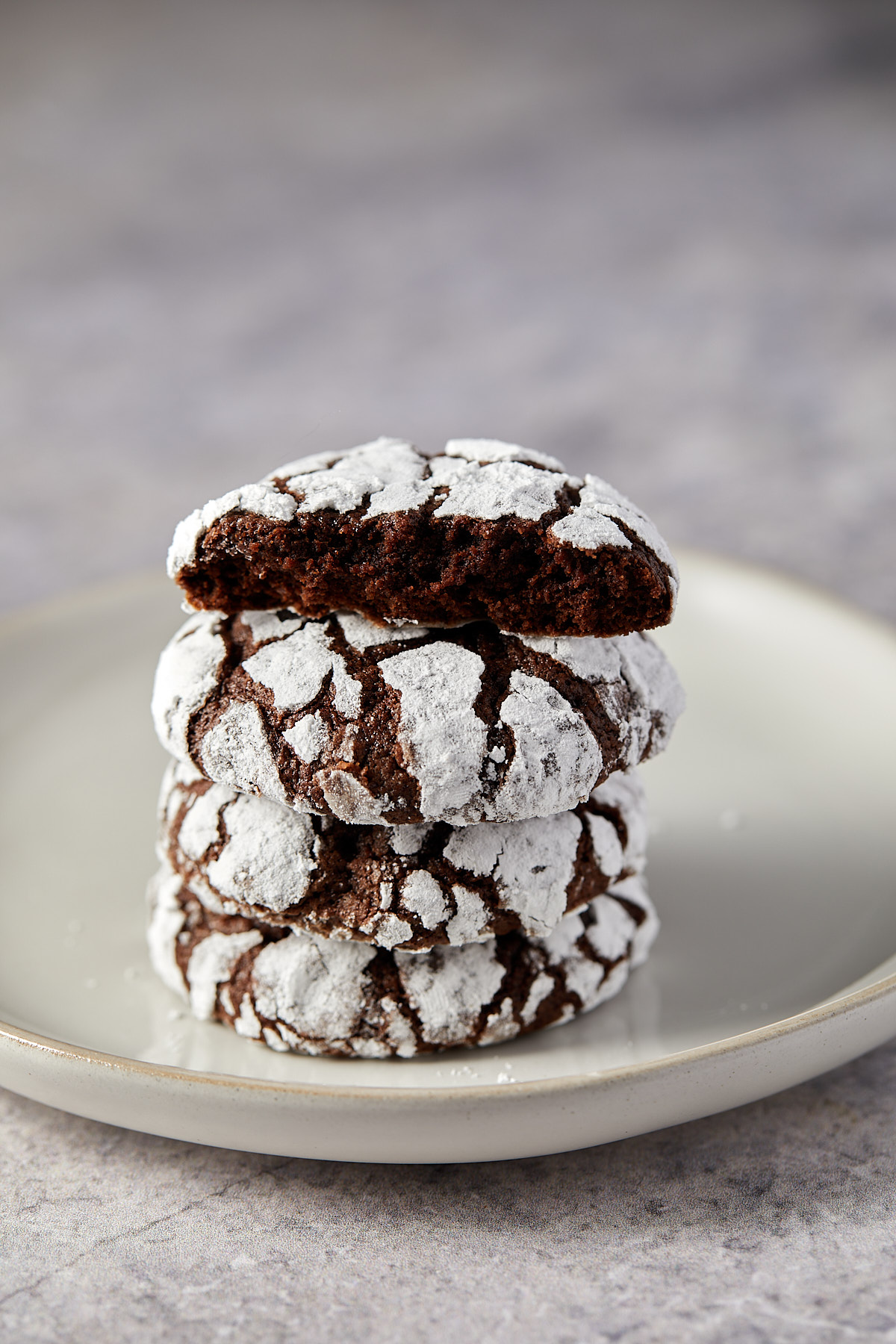
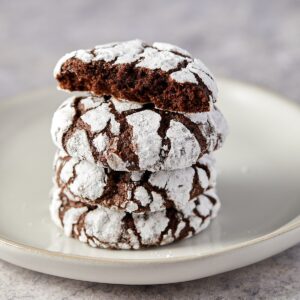
Chocolate crinkle cookies are hard to read in the oven because the powdered sugar stays on top and hides how done they are. On my test bake, I couldn’t tell, so I gave the first sheet 2 more minutes. At 14 minutes, they were baked all the way through, and everyone still ate them, but 12 minutes is where you keep the fudgy middle.
Save this Recipe!
The chocolate comes from two places: a whole 4 oz bar of semi-sweet, melted with the butter, plus natural cocoa powder in the dough. Each ball gets rolled in granulated sugar before the powdered sugar, which helps the tops crack. And I weigh every ball at 30 g on a kitchen scale, so the whole tray bakes evenly and the cracks match.
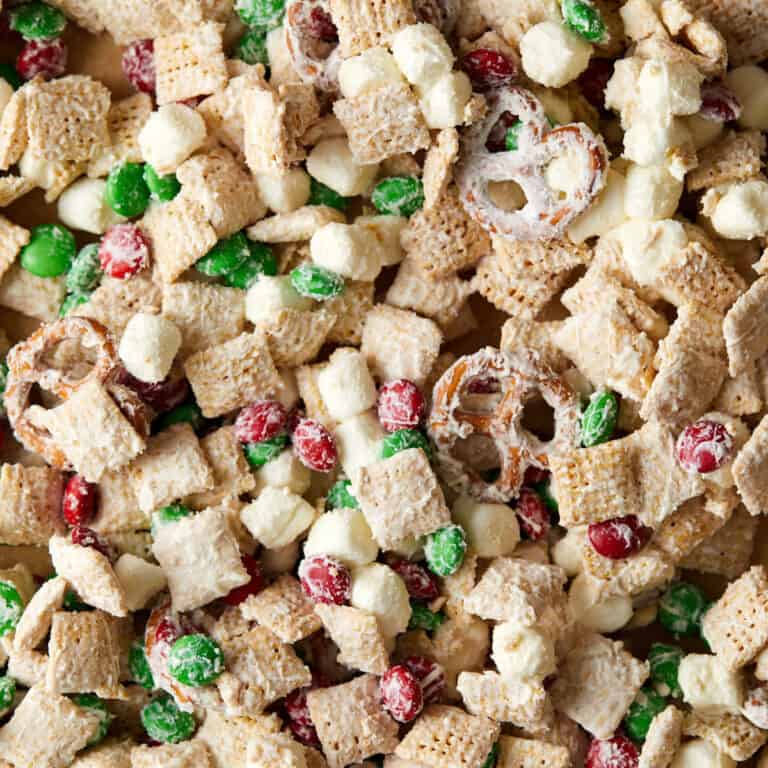
They taste like a brownie in cookie form, and my husband says they’re the best cookies I’ve ever made. If you’re putting together a holiday cookie tray, they sit nicely next to frosted sugar cookie bars, a pile of Rolo pretzels, a bowl of white chocolate reindeer chow, and a plate of Oreo balls.
Why You’ll Love This Recipe
- No mixer. Whisk and stir the dough by hand, and microwave the melted chocolate and butter.
- Plan ahead, because the dough has to chill. It needs at least 3 hours in the fridge. Mix the dough the night before, and baking is the easy part the next day.
- One chocolate bar, nothing left over. The recipe uses a whole 4 oz baking bar.
- 27 cookies from one batch. Enough for a cookie tray, a cookie exchange, and a few for the house.
Ingredients
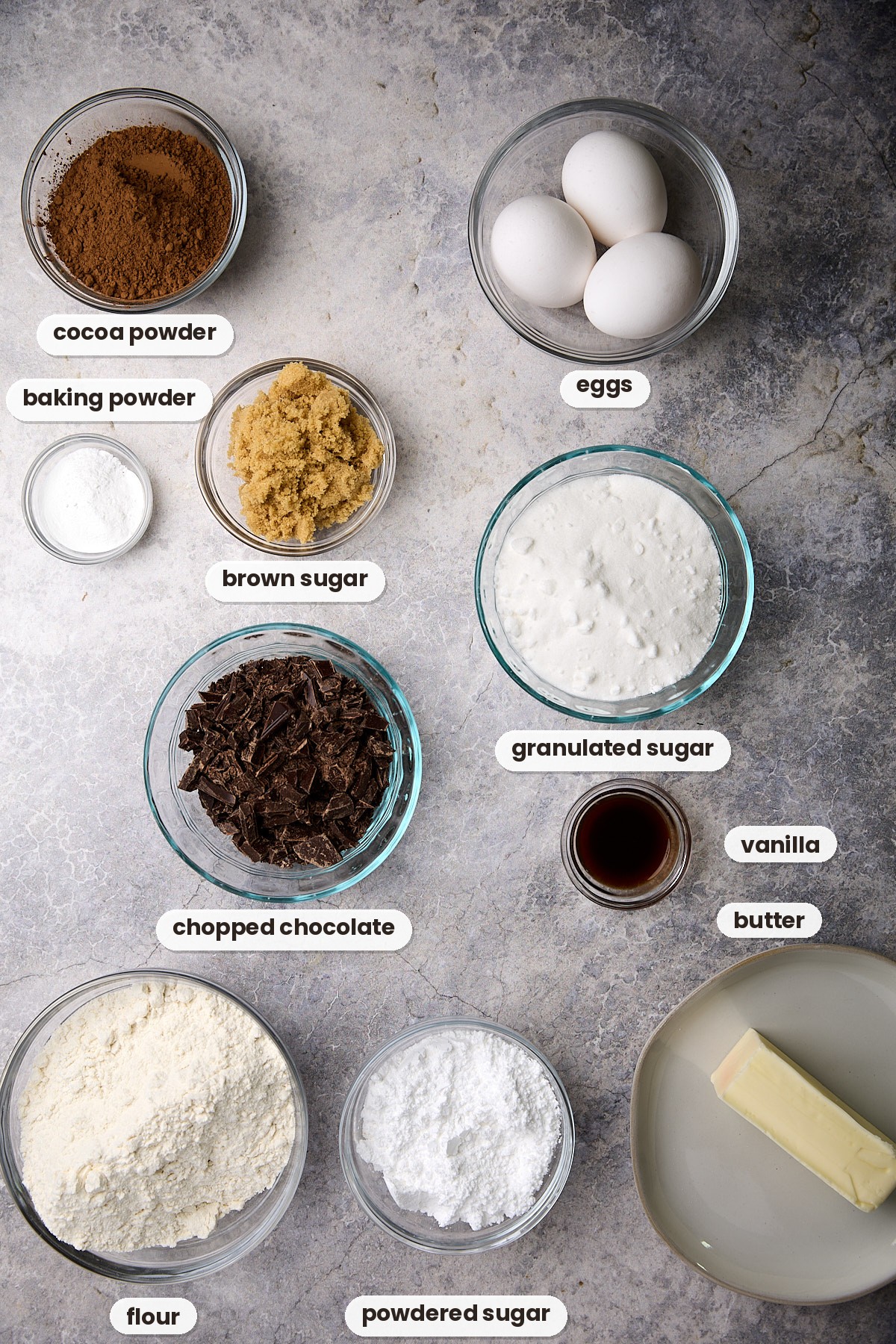
- Unsweetened natural cocoa powder. Use natural, not Dutch-process. The cocoa canisters in the baking aisle look nearly identical, so read the ingredients: if it says “processed with alkali,” it’s Dutch-process. Hershey’s Special Dark is labeled that way, and the regular Hershey’s canister is natural.
- Semi-sweet baking chocolate bar. Baking bars come in 4 oz, which is exactly what this recipe needs. Chop it so it melts evenly.
- Diamond Crystal kosher salt. If you’re using Morton kosher salt or table salt, use about half as much.
- Granulated and powdered sugar for rolling. You need both. The section below explains why.
See the recipe card below for full measurements.
Substitutions and Variations
- Dutch-process cocoa. Because this recipe uses baking powder, either cocoa should work (King Arthur Baking explains why). Dutch-process cocoa is darker and milder than natural.
- Chocolate peppermint crinkle cookies. Add a little peppermint extract with the vanilla. Start small, because peppermint takes over fast.
- Chocolate chips instead of the bar. Chips are made to hold their shape, so they melt thicker than a baking bar. The bar is what I used.
- Espresso powder. Bakers often whisk a small pinch in with the cocoa for a deeper chocolate flavor.
This recipe has not been tested with other substitutions or variations. If you replace or add any ingredients, please let us know how it turned out in the comments below!
Step-by-step instructions
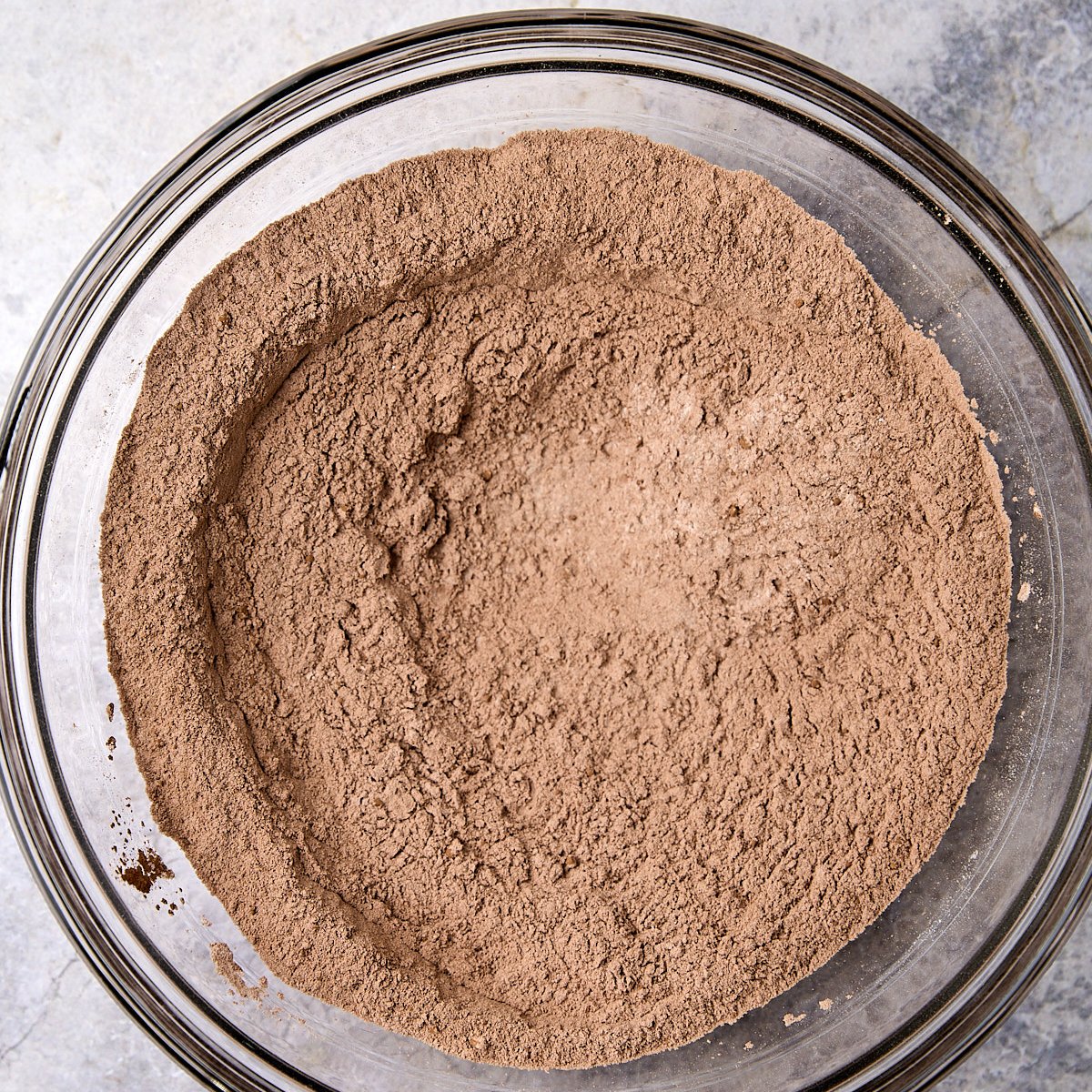
Whisk the dry ingredients. In a medium bowl, whisk the flour, cocoa powder, baking powder, and salt until no cocoa lumps remain.
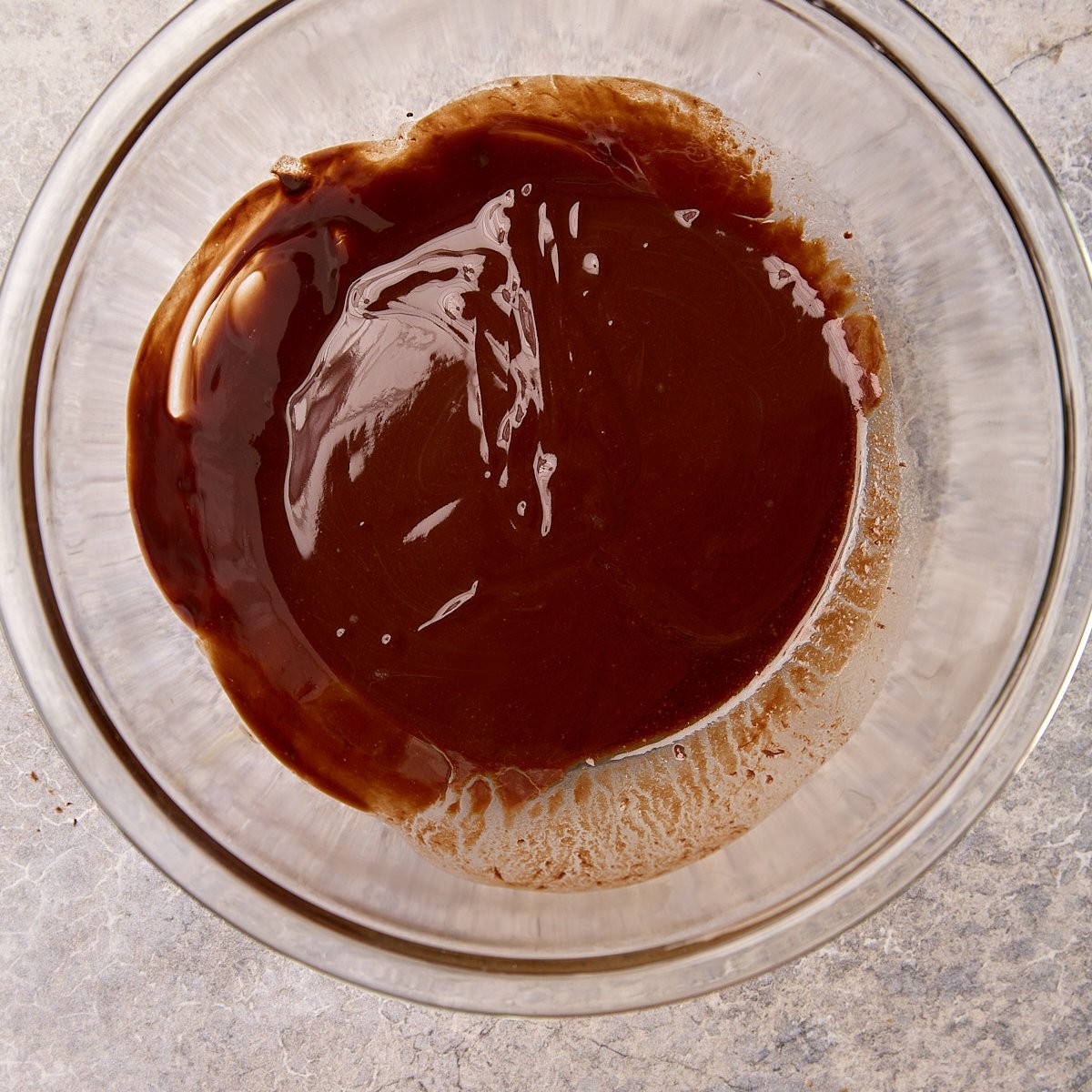
Melt the chocolate and butter. In a large microwave-safe bowl, heat the chopped chocolate and butter in 30-second bursts, stirring each time, until smooth and glossy.
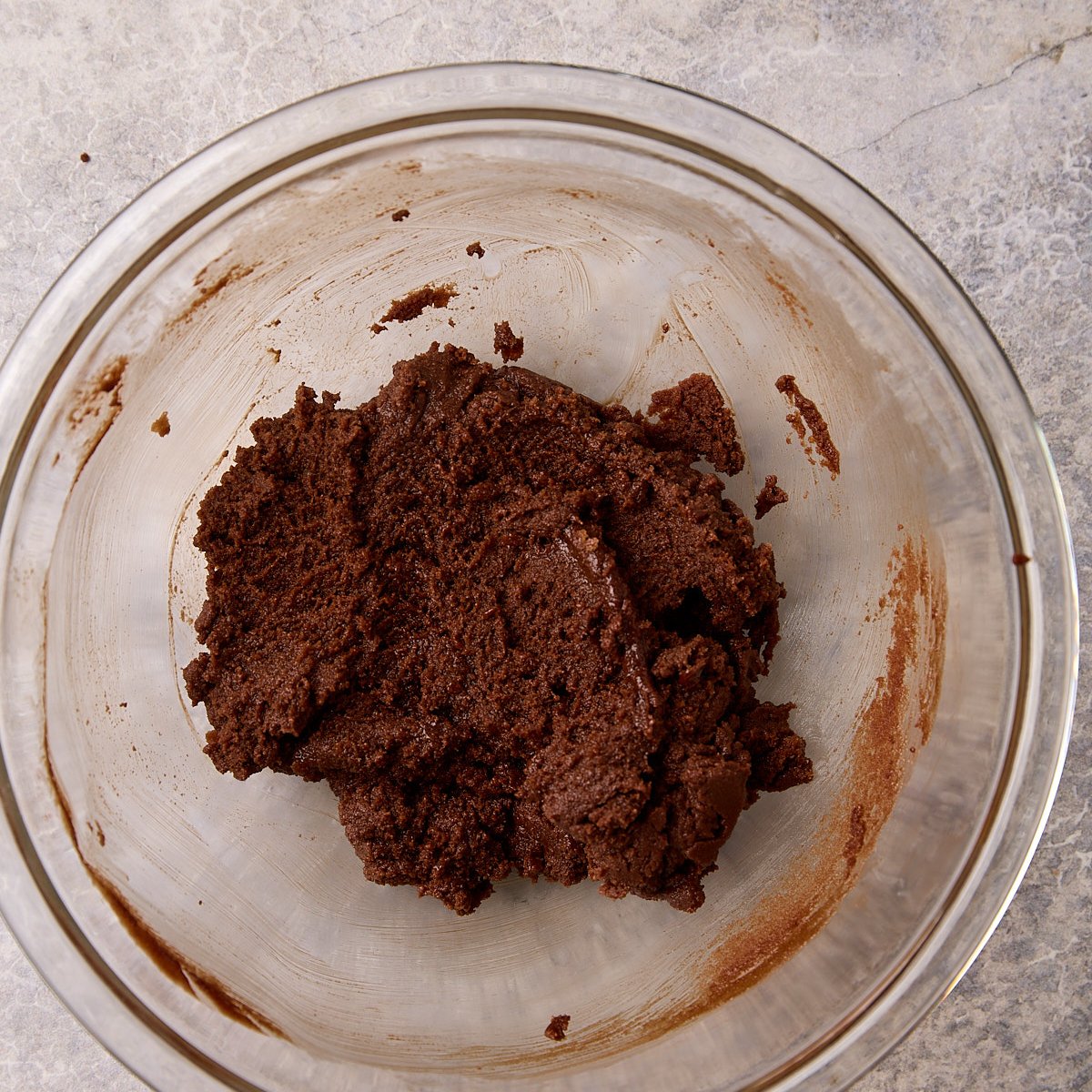
Add the sugars. Whisk the granulated and brown sugar into the melted chocolate until combined. It will look thick and a little grainy. Bang the whisk against the side of the bowl to knock out any sugar caught inside.
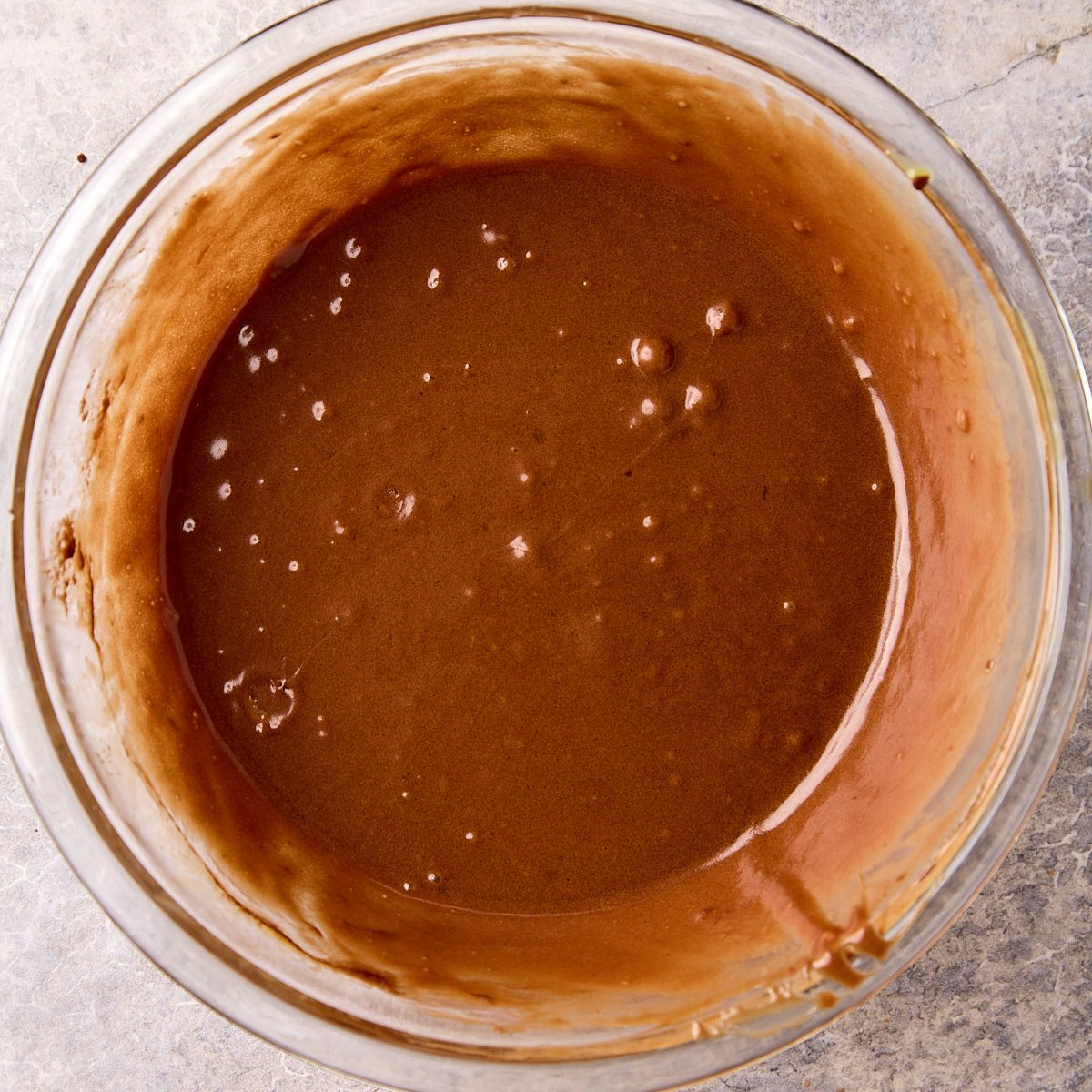
Add the eggs and vanilla. Add the eggs one at a time, whisking after each, then whisk in the vanilla. The batter should look shiny.
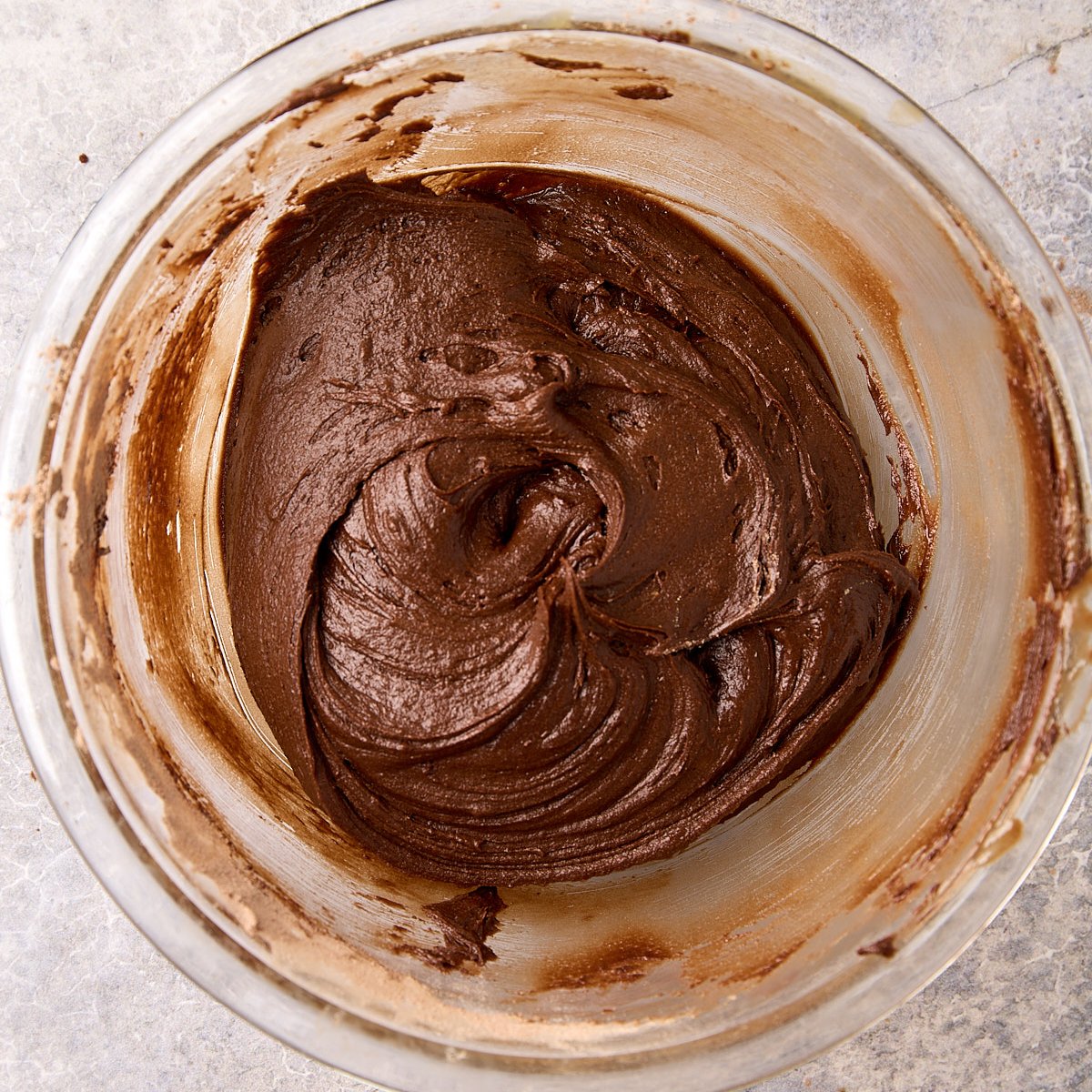
Fold in the dry ingredients. Switch to a spatula and fold in the dry ingredients just until no streaks of flour remain. The dough will be soft and sticky. Cover the bowl and chill for at least 3 hours or overnight, until the dough is firm enough to scoop.
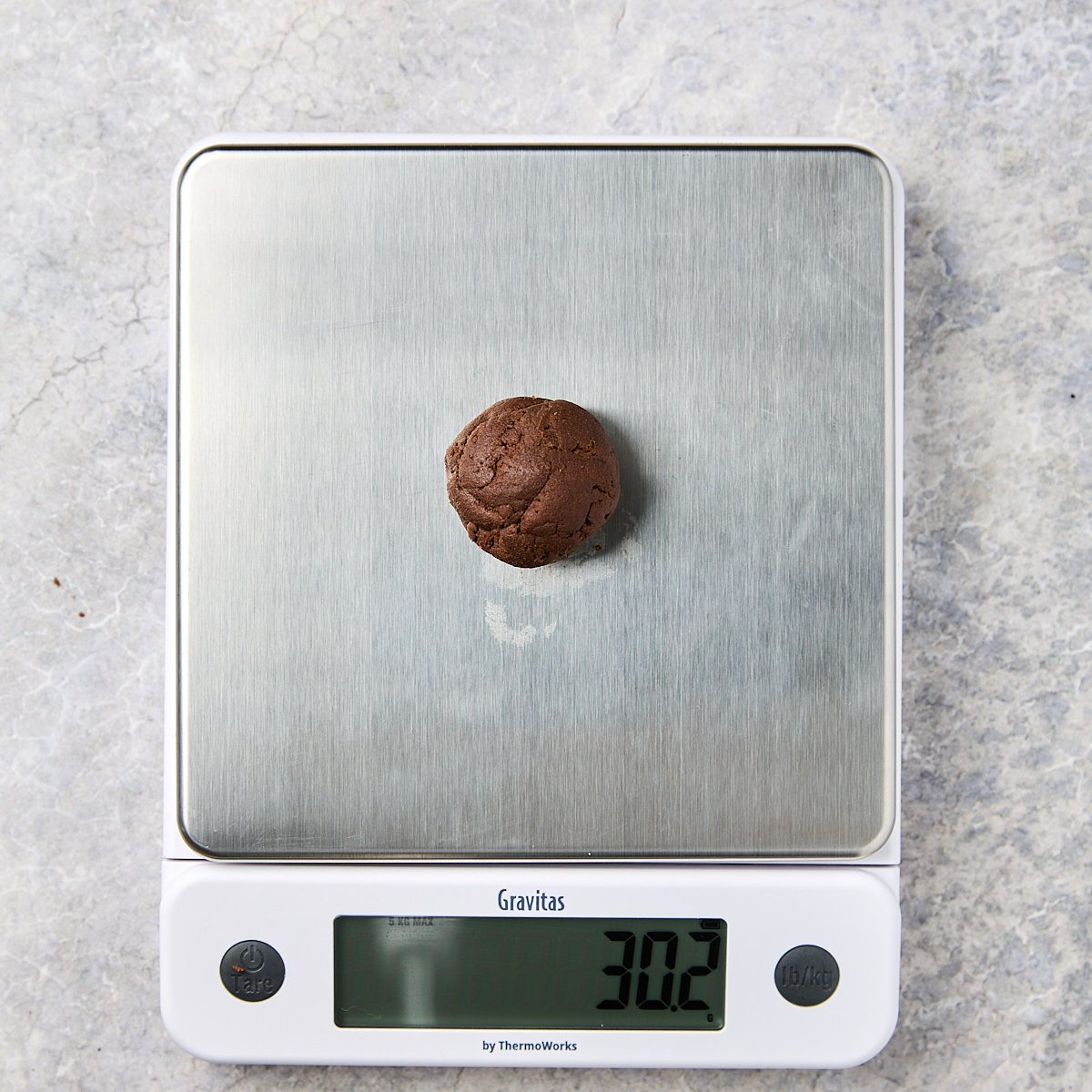
Shape the dough. Heat the oven to 350°F and line 2 baking sheets with parchment. Weigh 30 g pieces of dough (about 1½ tablespoons) and roll each one into a smooth ball.
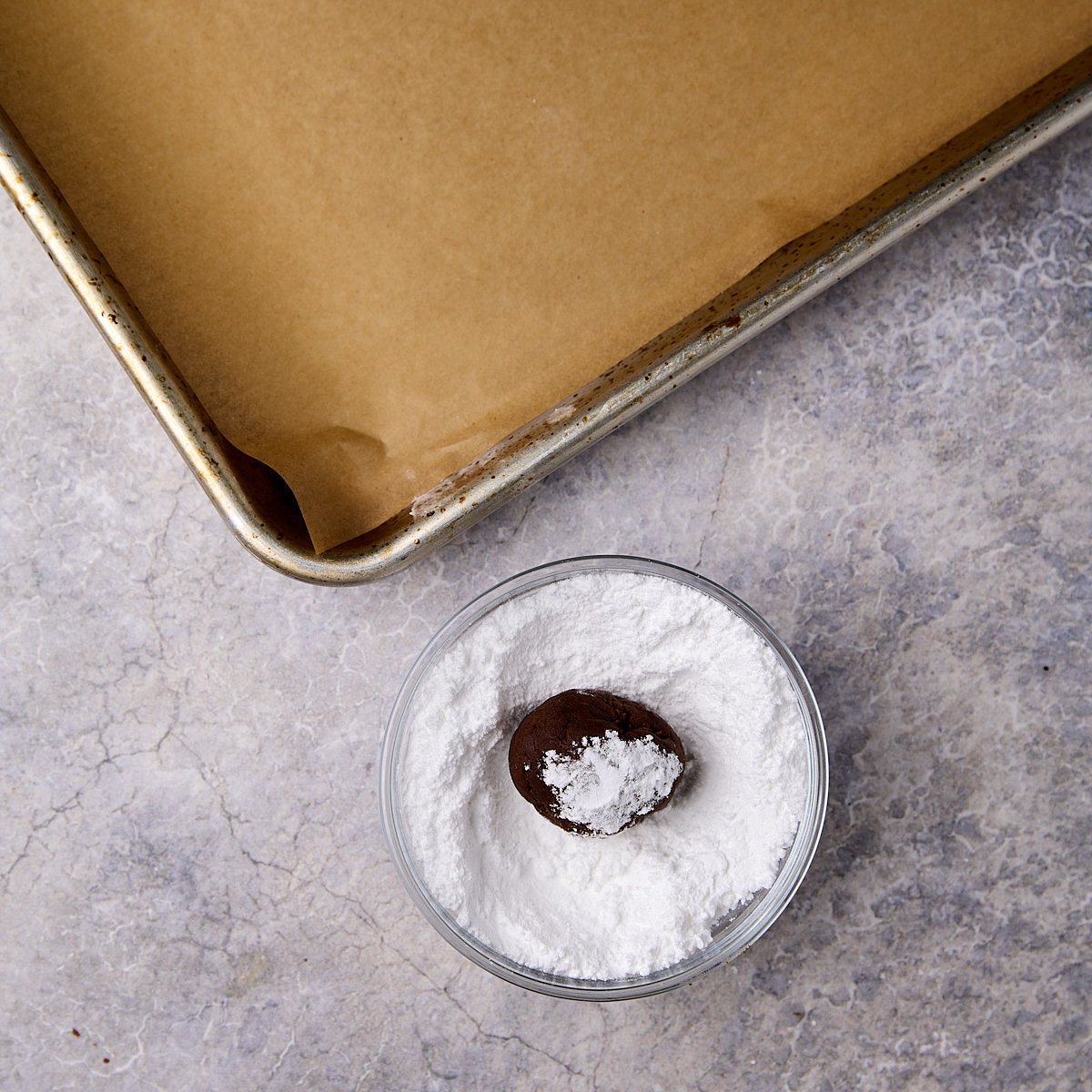
Roll in both sugars. Roll each ball in granulated sugar, then coat in powdered sugar. Set them 2 inches apart on the sheets.
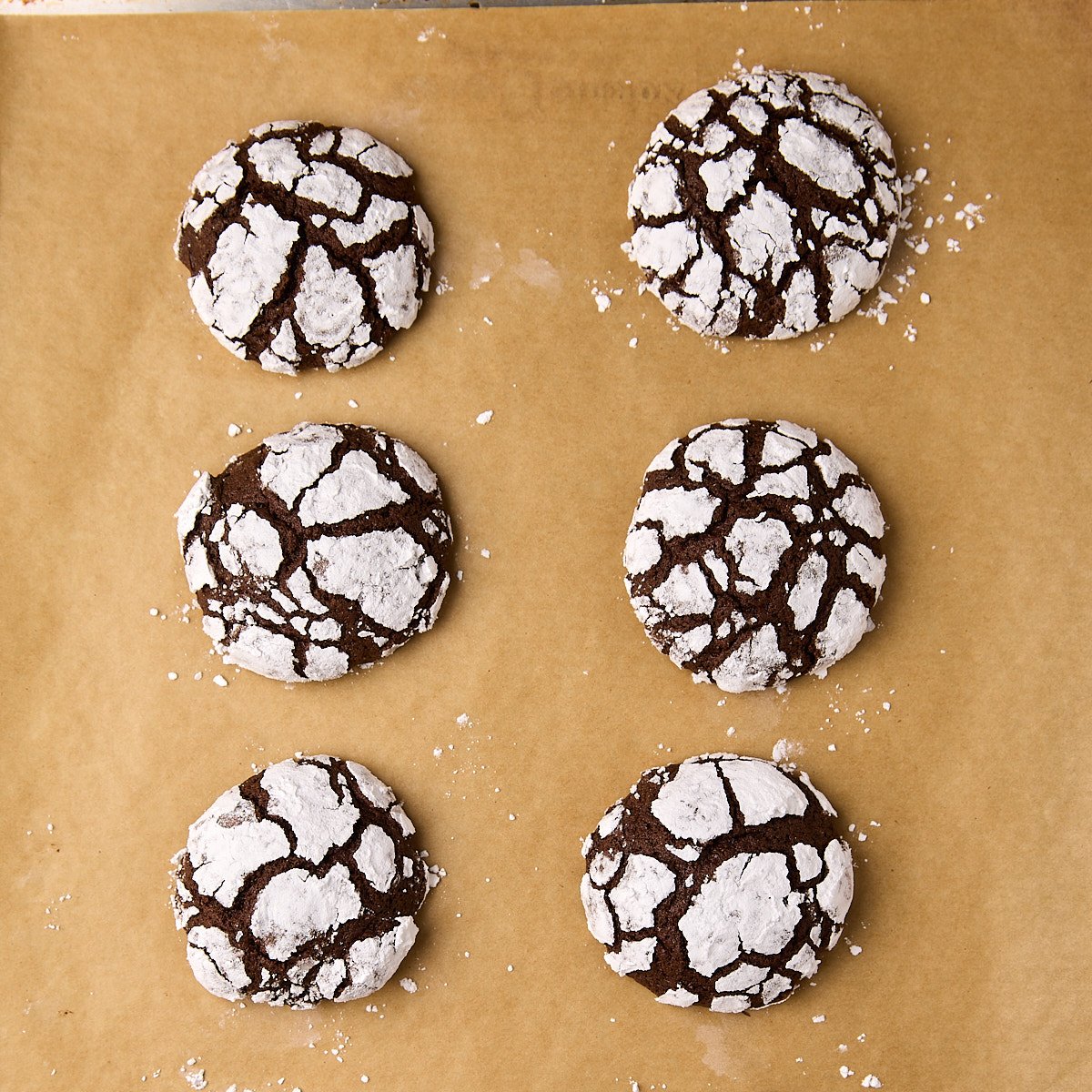
Bake. Bake one sheet at a time for 12 minutes. The powdered sugar makes them hard to judge by looking, so go by the timer. Let them cool for 5 minutes on the sheet, then move them to a rack.
How to tell when crinkle cookies are done
Honestly, it’s hard to tell by looking. The powdered sugar stays on the tops, so 12 minutes and 14 minutes are tough to tell apart on the sheet. The difference is inside: at 12 minutes, the middle is still fudgy, and it finishes setting from the pan’s heat while the cookies rest for 5 minutes.
Set a timer and trust it. If you go a couple of minutes over, don’t panic: my 14-minute sheet was cakier but still disappeared. You just trade some of the fudgy middle.
Why roll them in granulated sugar first
Both sugars pull moisture off the dough’s surface, drying the top so it cracks as the cookie bakes. Granulated sugar’s coarse crystals do it faster, which is why America’s Test Kitchen rolls their crinkle cookies in granulated sugar before the powdered sugar. The powdered sugar on top is what gives you the white.
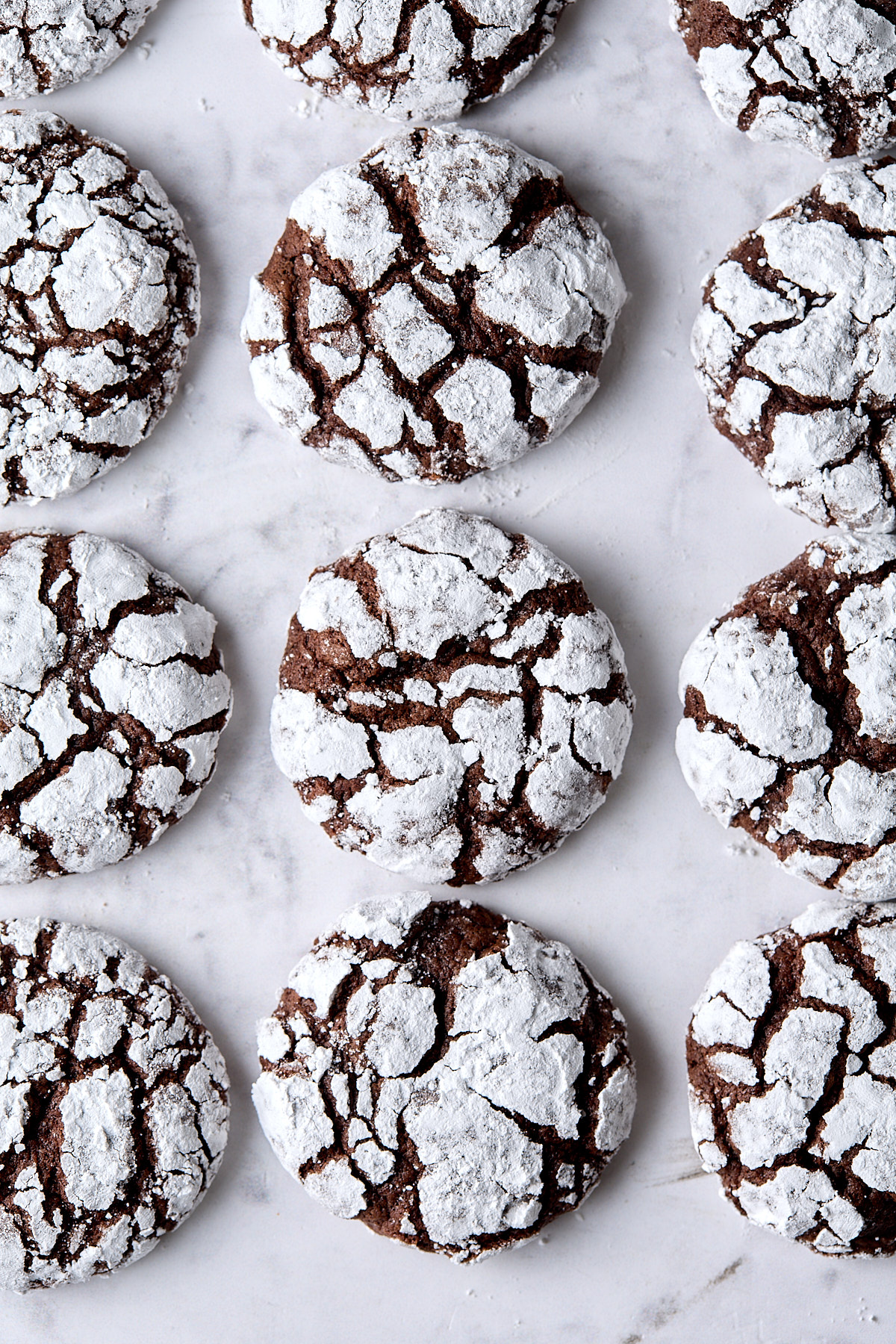
On my bake, the powdered sugar stayed bright white.
Sarah’s tips
- Break up the brown sugar lumps first. Press out any hard lumps before adding the brown sugar to the chocolate. It stirs in more easily, and you won’t end up with pockets of sugar in the cookies.
- Weigh the dough balls. A scale is the easiest way to get cookies that bake evenly and crack the same.
- Check the date on your baking powder. The cracks form as the cookies puff and spread in the oven, so old baking powder means flatter cookies with fewer cracks.
Recipe FAQs
Storage
Room temperature: Keep the cookies in an airtight container. They’re even better on day 2, making them a great bake-ahead for a cookie tray or cookie exchange.
To freeze the baked cookies
Let the cookies cool completely, then freeze them in single layers, with a sheet of parchment between each layer, in an airtight container or freezer bag. They keep for up to 3 months. Thaw them on the counter or in the fridge. The powdered sugar soaks in a little as they thaw, so give them a fresh dusting before serving and they’ll look just-baked again.
To freeze the dough balls
Chill the dough, weigh and roll it into balls, then stop before the sugar coating. Freeze the balls on a parchment-lined sheet pan for 1–2 hours, until solid, then move them to a freezer bag for up to 3 months. When you’re ready to bake, let them sit on the counter for 20–30 minutes so the sugar will stick. Then roll them in granulated sugar, coat them in powdered sugar, and bake as directed.




Recipe
Crinkle Cookies
Equipment
- kitchen scale optional
- Parchment paper optional
Ingredients
Dough
- 1⅔ cups (208 g) all-purpose flour, spooned and leveled
- ⅔ cup (57 g) unsweetened natural cocoa powder
- 2 teaspoons baking powder
- ¾ teaspoon (3 g) Diamond Crystal kosher salt
- 4 oz (113 g) semi-sweet baking chocolate bar, chopped
- 6 tablespoons (85 g) unsalted butter
- 1 cup (200 g) granulated sugar
- ¼ cup (50 g) packed light brown sugar
- 3 large eggs, room temperature
- 2 teaspoons vanilla extract
For Rolling
- 1/4 cup (50 g) granulated sugar
- 1/2 cup (60 g) powdered sugar

Instructions
- Whisk the flour, cocoa powder, baking powder, and salt in a medium bowl. Set aside.
- Microwave the chocolate and butter in a large bowl in 30-second bursts, stirring each time, until smooth.
- Whisk in both sugars, then the eggs one at a time, then the vanilla.
- Fold in the dry ingredients with a spatula just until no streaks remain.
- Cover and chill at least 3 hours or overnight, until firm enough to scoop.
- Heat the oven to 350°F. Line 2 baking sheets with parchment.
- Weigh 30 g balls of dough (about 1½ tablespoons) and roll them smooth.
- Roll each ball in granulated sugar, then coat in powdered sugar. Space 2 inches apart.
- Bake one sheet at a time for 12 minutes, until the edges are set.
- Cool 5 minutes on the sheet, then move to a rack.