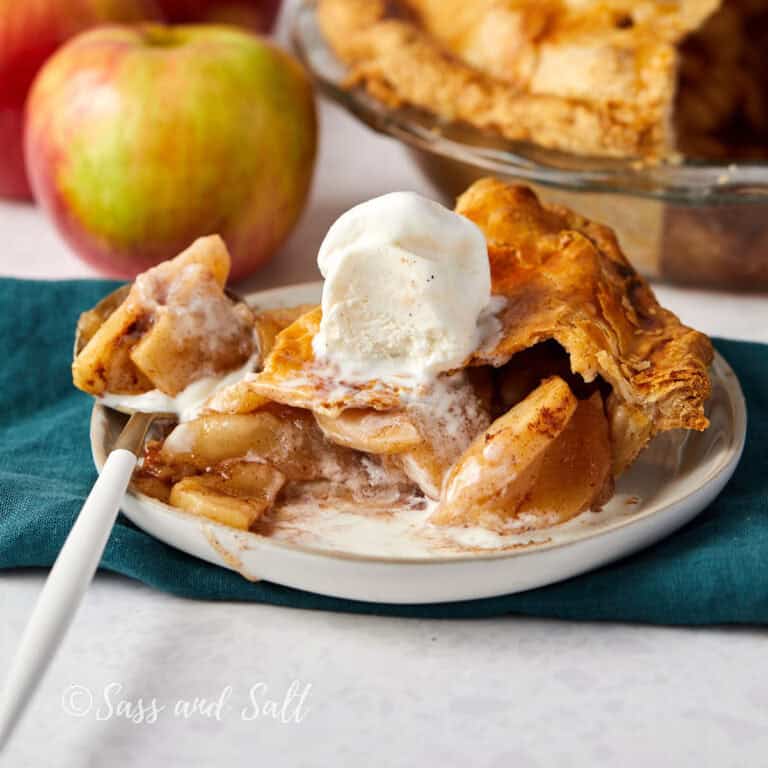
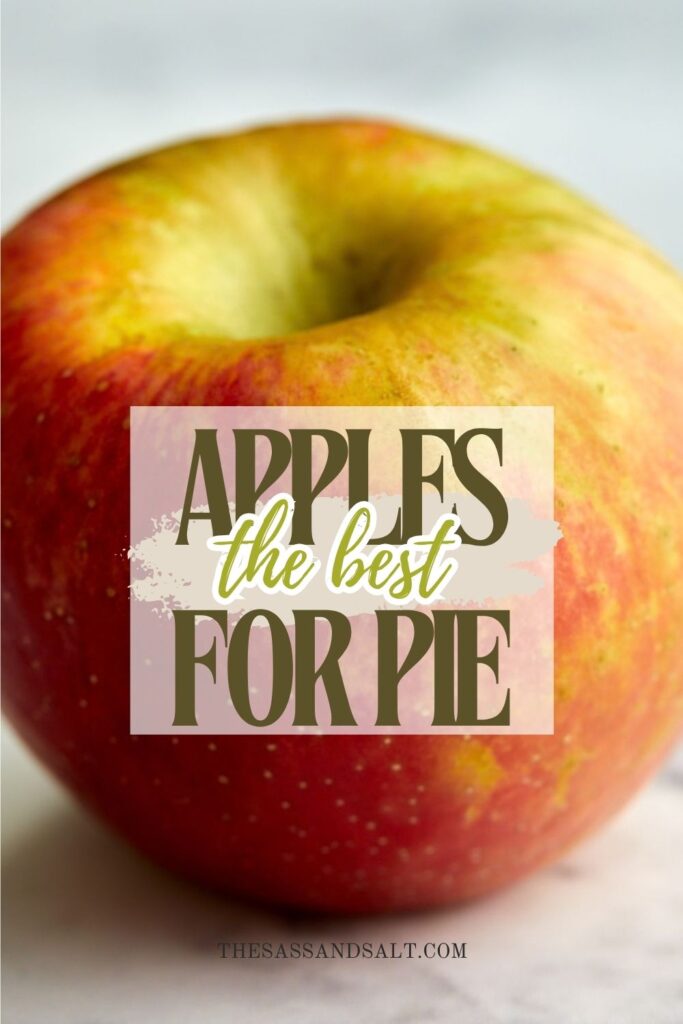
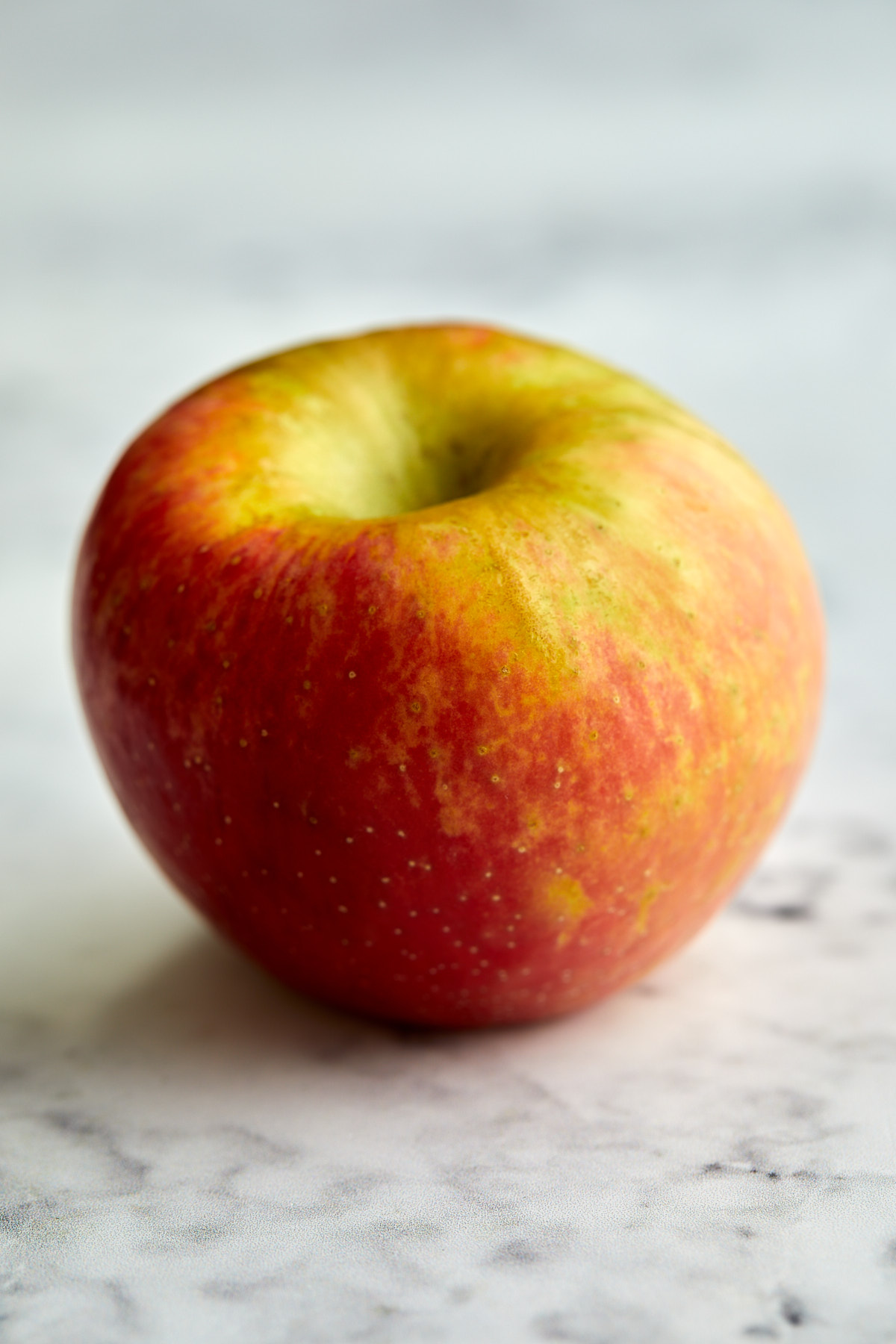
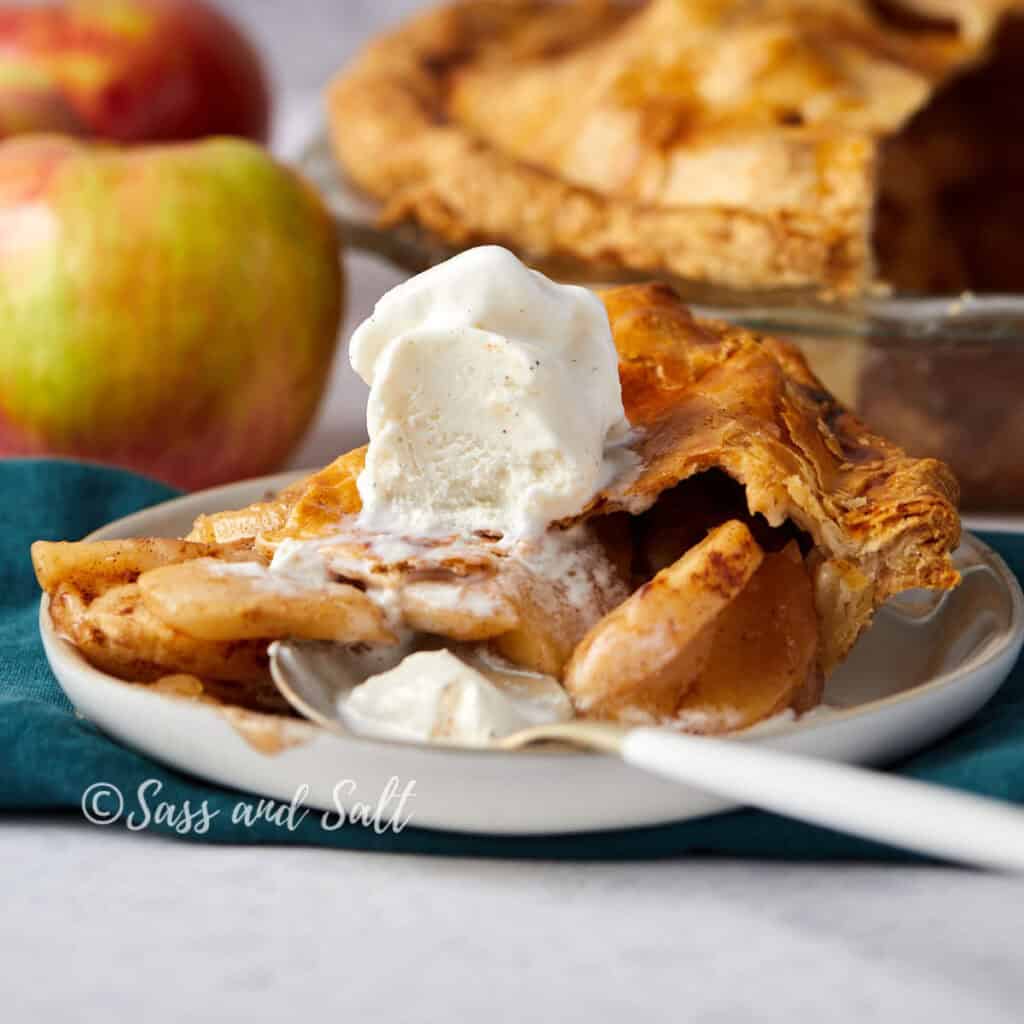
My mom taught me how to bake apple pie, and choosing the best apples for apple pie turned out to be the part that mattered most. Over the years, I’ve made it my own, simplifying and testing until it became, at least at my table, both the easiest apple pie and the best one. That pie is my honeycrisp apple pie, and it starts before the oven ever turns on, with the apples you bring home from the store.
Save this Recipe!
What actually matters is how much water an apple holds, how much acid it carries, and whether its cells rupture or collapse under heat. Everything else is preference. And here is where I part ways with almost every other guide you will read: I do not blend varieties. My pie is Honeycrisp and nothing else, because a Honeycrisp is already sweet-tart on its own and does the balancing job that other people need two apples to do.
The short answer
The best apples for apple pie are Honeycrisp, and you do not need to mix them with anything.
That is a minority opinion. Most guides tell you to blend a sweet apple with a tart one. The reason they say that is sound: you need both sugar and acid or the filling tastes flat. But a Honeycrisp is already sweet-tart, so it carries both sides itself, and it holds its slices through a long bake instead of collapsing.
If your store is out of Honeycrisp, Granny Smith is the swap I have actually tested. It works, though it stays firmer than I like.
If you came here at 4:45 on a Tuesday and just needed the answer, that was it. The rest of this is the reasoning, plus what to do with every other apple in the display.
What actually makes an apple hold up in a pie?
Three things, and none of them are flavor.
Water content. A pie is a sealed, wet environment. An apple that is already holding a lot of water dumps it into the filling, and you get the gap under the top crust that everyone complains about. It also soaks the pastry underneath, which is why a wet apple and a butter pie crust are working against each other.
Acid. Sugar without acid tastes like syrup. Acid is what makes a pie taste like apples instead of like sweetness.
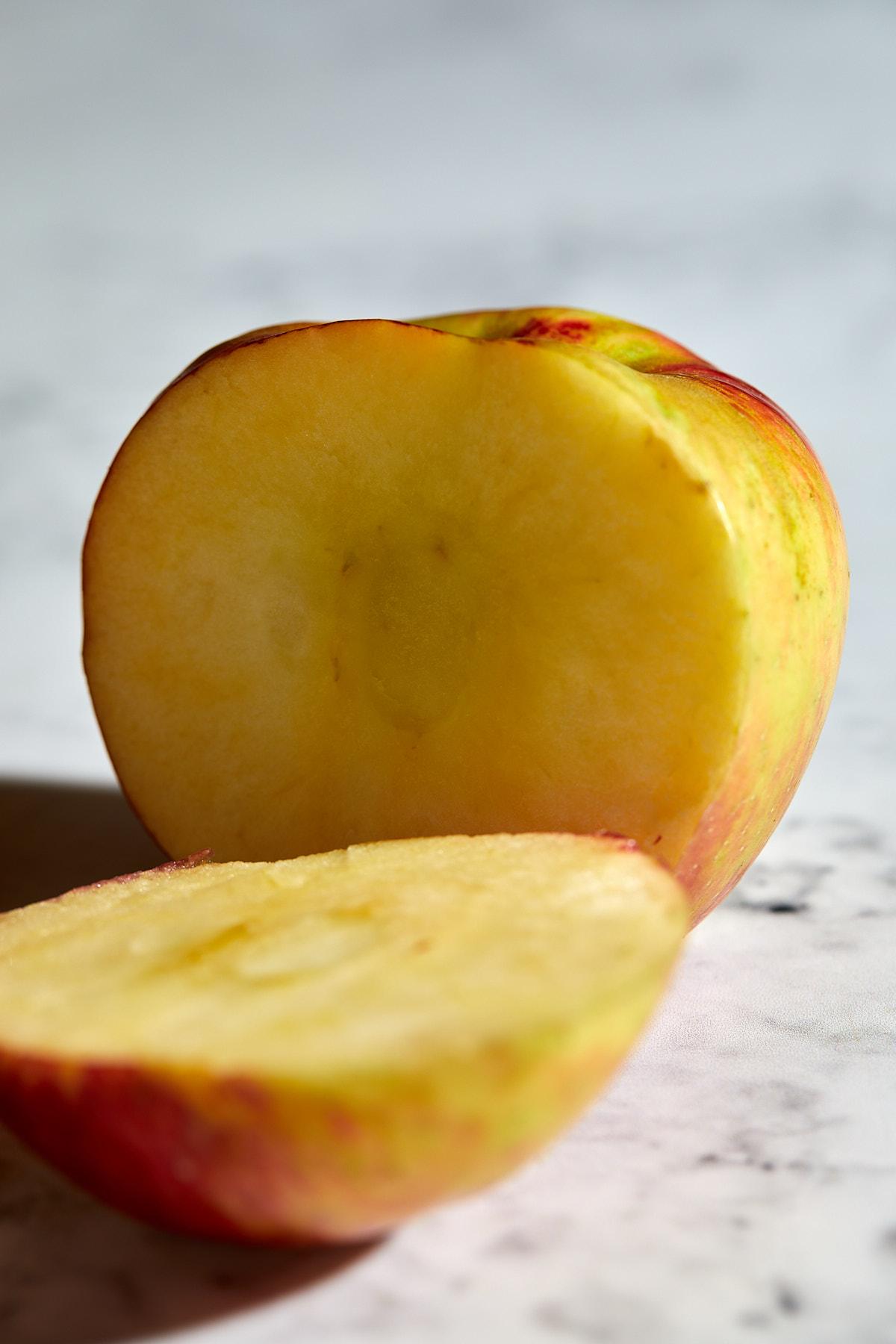
Cell structure. This is the one nobody explains. In most apples, the cells shear apart when you bite, which is why they go soft when cooked. In Honeycrisp, the cells rupture instead, which is why it stays crisp raw and holds together when baked. They bred that trait deliberately at the University of Minnesota.
Chef’s Note: Every variety recommendation below assumes a raw filling, which is what most home apple pie recipes use. If you are making a pre-cooked filling, the rules change: varieties that would collapse in a raw filling can work fine, because you control the moisture before it ever hits the crust.
Do you actually have to mix apple varieties?
No. You can, and plenty of good bakers do, but it solves a problem a Honeycrisp doesn’t have.
The case for blending is real: most apples are either sweet or tart, rarely both, so combining them gets you a filling with some backbone. If you are working with Golden Delicious or Gala, blending is genuinely the fix.
A Honeycrisp is sweet-tart already. So the blend is redundant, and it costs you something: two varieties soften at different rates, which is how you end up with some slices intact and some gone to mush in the same slice of pie.
I have made this pie with a blend, and it was fine. The all-Honeycrisp version was better, and that settled it. Buying one variety is also just easier: one kind to pick, one size to judge, and no juggling ratios in the produce aisle.
I have tried the juice-control tricks on this pie too. Pre-cooking the filling made the apples too soft for me, and letting the sliced apples sit in the sugar to draw the juice out, then pouring it off, left the pie too dry. I will admit this is a juicy pie, but it is juicy by design, and I stopped fighting it. The tapioca and a full cooling rest handle the juice better than either workaround did.
The one place blending clearly earns its keep is a pre-cooked filling, where you cook the apples down before they go in the crust and you control the moisture yourself. Different method, different answer.
The nine varieties, ranked for pie
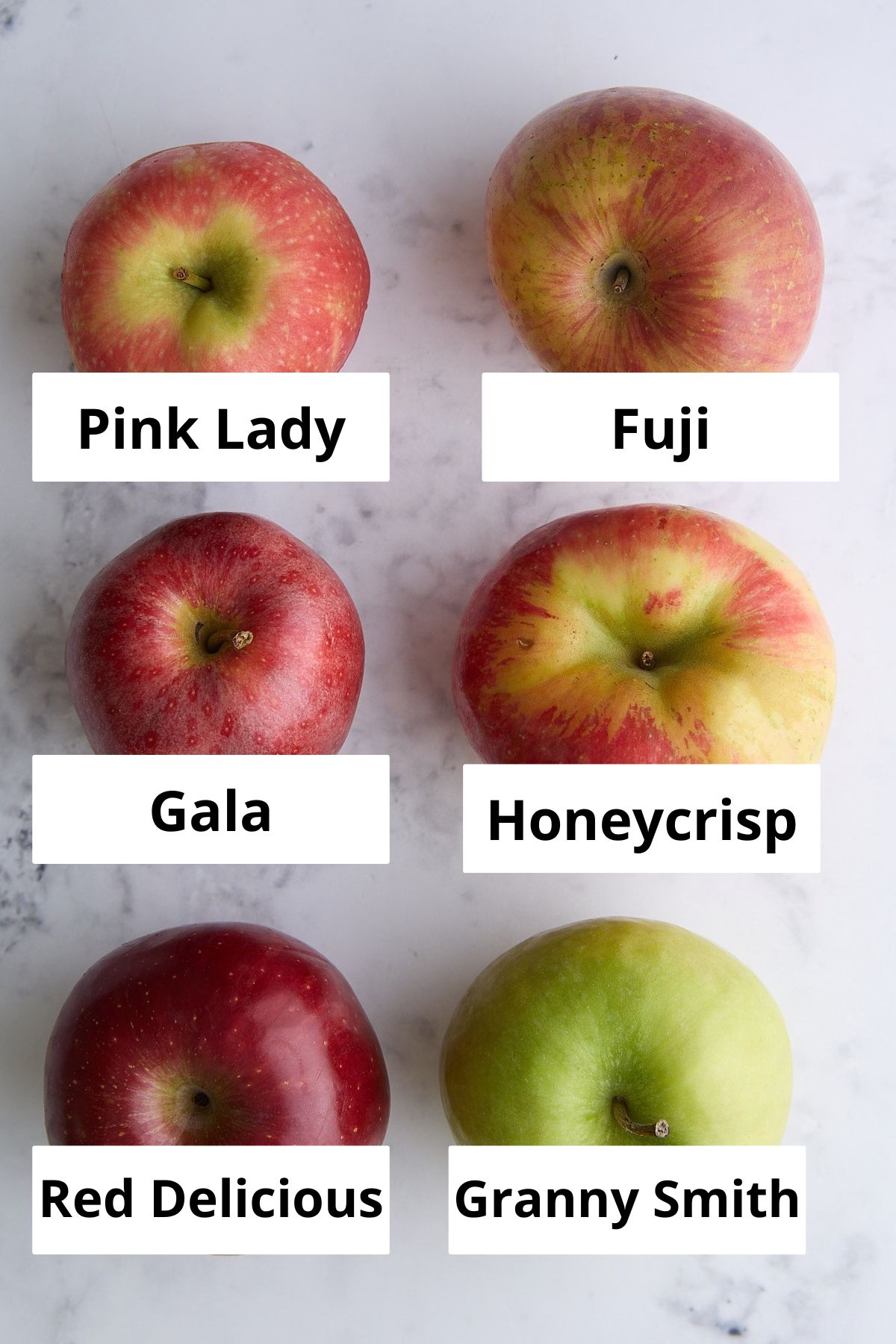
Every entry below assumes a raw filling, which is what my pie uses and what most home apple pie recipes use. A pre-cooked filling changes the answers, because you drive the water off before it ever touches the crust.
Honeycrisp and Granny Smith are the two I bake with, so those come straight out of my own oven. The rest are placed on acid, water, and cell structure, which is how you read any apple before you ever cut into it.
Honeycrisp. The one I use. It holds its slices through a 50-minute bake, and it is sweet-tart on its own, so the filling has backbone without a second variety doing that job. The cell structure is the reason: in most apples the cells shear apart under heat, and in a Honeycrisp they rupture instead, which is exactly what it was bred to do. If you can only find one apple, this is the one to look for.
Granny Smith. The one I reach for second. Very firm, very tart, and it will not fall apart on you. The trade is that it stays firmer than I like, so you can end up with a slice that is still a little crunchy at the edges. Cut it slightly thinner than you would a Honeycrisp and give the pie an extra 5 minutes. Use it when: your store is out of Honeycrisp, or you want a sharper pie.
Braeburn. Firm, dense, genuinely sweet-tart. That is the full profile you want, all three traits in one apple. It holds its shape through a long bake and carries its own acid, so it doesn’t need a second variety propping it up. Use it when: Honeycrisp is gone, and you want the same kind of pie rather than a sharper one.
Pink Lady, sold as Cripps Pink. The tart one that holds. High acid and very firm. It will not go soft on you, and the acid keeps the filling from tasting flat, which is the failure mode of every sweet apple on this list. Use it when: you want tart, or Granny Smith is gone, and you still want that edge.
Jonagold. Worth grabbing when you see it. A Jonathan crossed with a Golden Delicious, so it carries the tang of one and the sweetness of the other. It holds its shape better than a Golden Delicious and not as well as a Braeburn, which puts it squarely in the usable middle. Use it when: you find it in season at a farm stand, which is mostly when you will find it at all.
Golden Delicious. Softens more than I want. Sweet, low in acid, and it breaks down faster than the apples above. In a raw filling, that means more liquid and slices that lose their edges. Not a disaster, just not what I am after. Use it for: applesauce, where you actually want it to collapse.
Gala. Too soft, too sweet. Lovely raw, and that is the problem. Low acid means the filling tastes flat, and it goes soft well before the crust is done. Use it for: lunchboxes, or a pre-cooked filling where you control the moisture.
Fuji. Holds up, tastes one-note. Dense enough that it keeps its shape, so it is not a structural failure. But it is very sweet with almost no acid, and a pie made entirely of Fuji tastes like sugar rather than like apples. Use it for: eating out of hand, or alongside a tart apple if you are blending.
Red Delicious. The one to skip. It goes mealy under heat, and the flavor disappears. That is not a knock on the apple so much as on what it was bred for: it was selected for color, shape, and how well it survives shipping, not for cooking. Use it for: the fruit bowl, if anyone in your house still eats them.
Chef’s Note: Notice the pattern. Every apple that fails here fails for the same two reasons: low acid or high water, and every one that works is firm and tart enough to carry itself. Once you know that, you can walk up to a variety nobody has written about and call it correctly.
How many apples do you need for a pie?
For a standard 9-inch double-crust pie: 2½ to 3 pounds, which usually works out to 6 to 8 medium apples.
| Pie | Weight of apples | Roughly how many medium |
|---|---|---|
| 8-inch double crust | 2 to 2½ lb | 5 to 6 |
| 9-inch double crust | 2½ to 3 lb | 6 to 8 |
| 10-inch double crust | 3 to 3½ lb | 8 to 9 |
| 9-inch deep dish | 3½ to 4 lb | 9 to 11 |
One thing the chart cannot know: how deep your pie plate is. Mine is a deep 9-inch, so my honeycrisp apple pie takes 10 cups of sliced apples, about 8 large Honeycrisps, which is roughly 3½ pounds before peeling. Measure yours, and if it runs 1½ to 2 inches deep, buy for the deep-dish row.
Buy by weight if you can. Apple size varies enormously, and “6 apples” from a bin of small Galas is not the same as 6 apples from a bin of enormous Honeycrisps. This is how people end up with a pie that looks half empty once it bakes down.
A medium apple weighs about 6 ounces per USDA FoodData Central, and a pound gives you roughly 3 cups sliced.
Pro Mom Hack: buy one extra apple. Not for the pie, for the kid who wanders through the kitchen while you are peeling and asks what you are doing.
Do you have to peel apples for apple pie?
Technically, no. In practice, I always do, and I would tell you to do the same.
Apple skins do not soften in the oven. They stay tough, so you get chewy strips running through a filling that is otherwise completely soft, and that texture is the part I cannot get past. I celebrate a shortcut wherever I can find one, and this is the one I will not take.
Peeling a pie’s worth of apples is tedious. Do it anyway.
Best apples for apple crisp
Crisp is more forgiving than pie, and it is worth knowing why: there is no bottom crust to protect. In a pie, a wet apple soaks the pastry underneath it and you get the dreaded soggy bottom. In a crisp, extra juice just bubbles up around the topping and nobody minds.
So apples that fail in a pie can work here. Golden Delicious, Jonagold, and McIntosh all soften into something closer to a sauce with fruit still in it, and under a buttery oat topping that is a good result rather than a bad one.
Honeycrisp still works; it just stays more distinct. Choose based on whether you want to see apple slices.
Best apples for applesauce
Here you want the opposite of everything above. You want the apples to collapse.
McIntosh is the classic for exactly that reason, and Golden Delicious is right behind it. Both break down into a soft, naturally sweet sauce with barely any help. The apples that fail in a pie are the ones that shine in a pot.
Mix in one tart apple if you have it. A single Granny Smith in a batch keeps it from tasting like syrup.
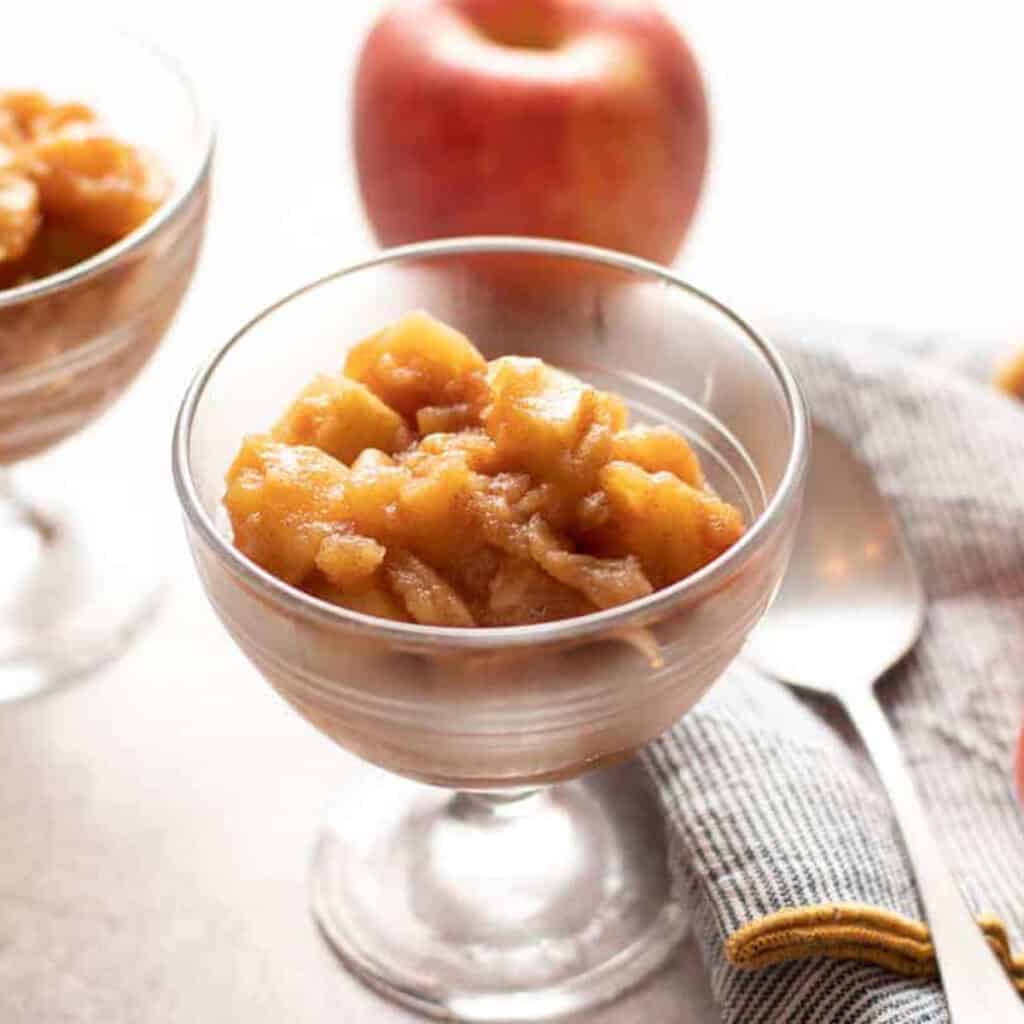
My cinnamon maple chunky applesauce leans into this, with maple instead of white sugar and the apples deliberately left in pieces.
Best apples for baking generally
Cakes, muffins, and bars follow a third set of rules.
The apple gets diced small rather than sliced, surrounded by sugar and fat, and bakes for a shorter time. That means water content matters more than structure. A juicy apple that would be fine in a pie can make a muffin gummy in the middle.
For anything with a batter: Granny Smith diced small, patted dry if it looks wet. The acid also stops the crumb from tasting flat, which is the usual problem with apple cake.
For bars and anything with a shortbread base, the same logic applies. My salted caramel apple pie bars use a firm apple for exactly this reason: the crust underneath has nowhere to hide from a wet filling.
When to buy: a month-by-month reality check
Apples are in the store all year, but they are not the same apples all year.
Late August through October is new crop. This is when the fruit is freshest, the selection is widest, and the varieties you only ever see in autumn actually turn up. If you are making one apple pie a year, make it now.
November through roughly February is still good. Apples hold well in controlled-atmosphere storage, which slows them down without freezing them, so a February apple is usually still firm.
March through summer is where it shows. You are eating fruit picked the previous autumn, or fruit shipped from the Southern Hemisphere. Still perfectly good, just flatter. This is why a spring apple pie never quite tastes like an October one, and it is not your baking.
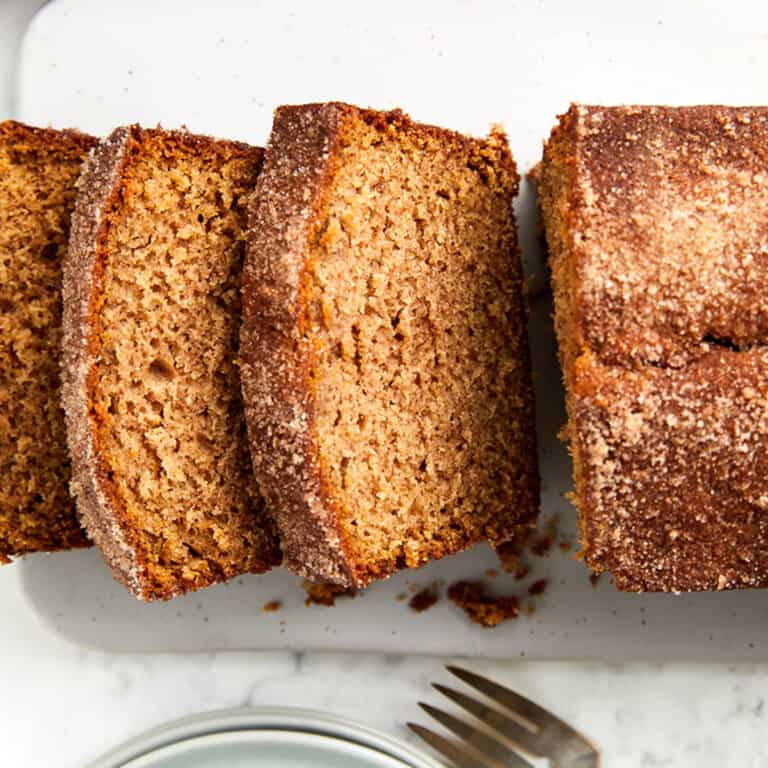
And if your apples are past their best, they are better baked than raw. My apple cider donut loaf cake leans on cider rather than fresh fruit, so it works in March as well as it does in October.
Apple pie FAQs
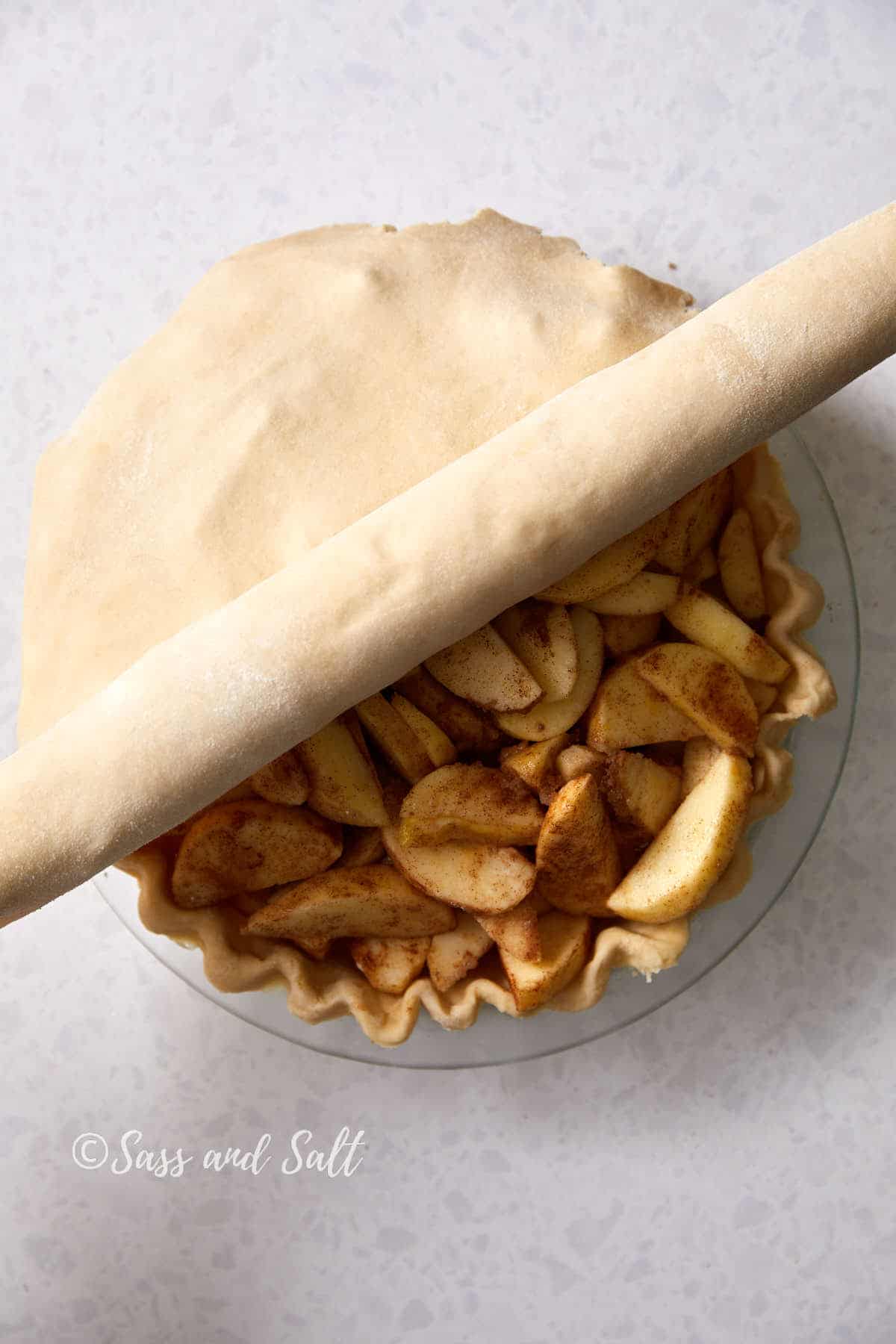
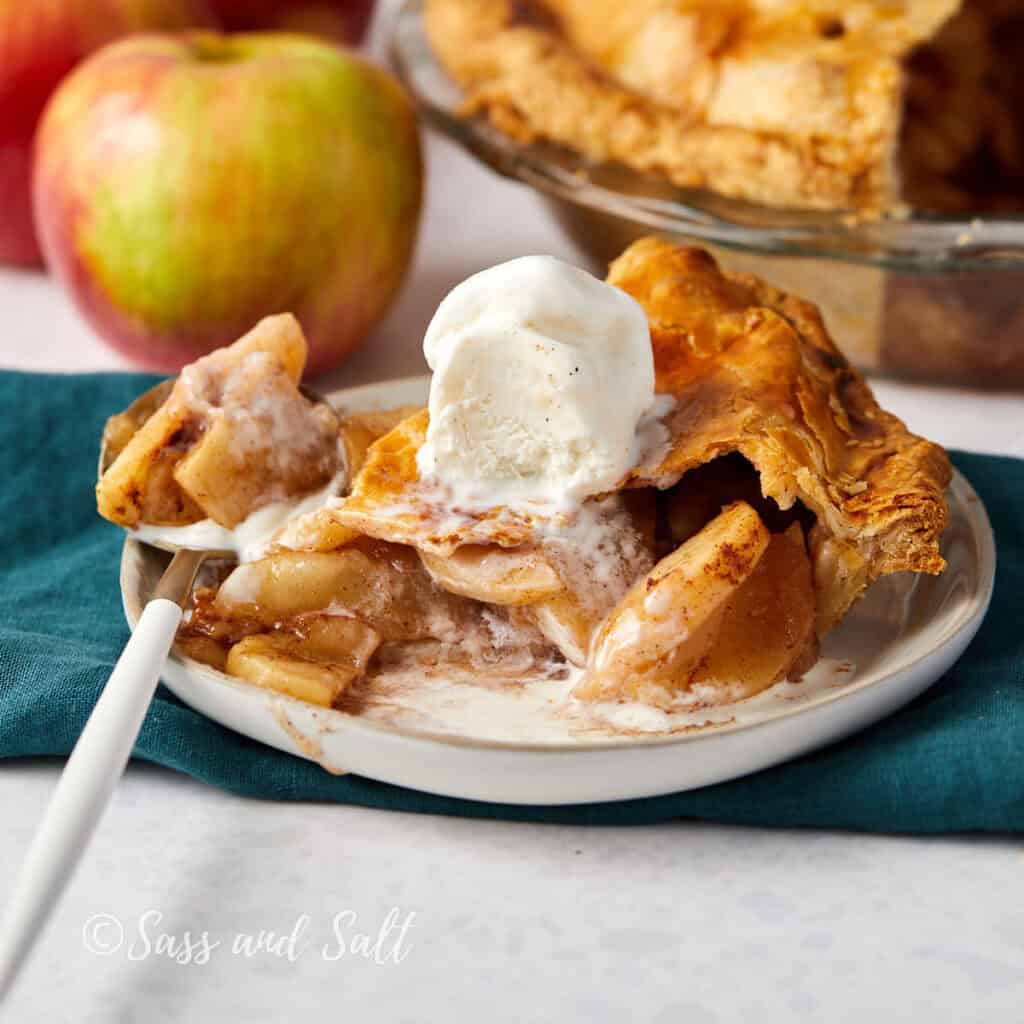
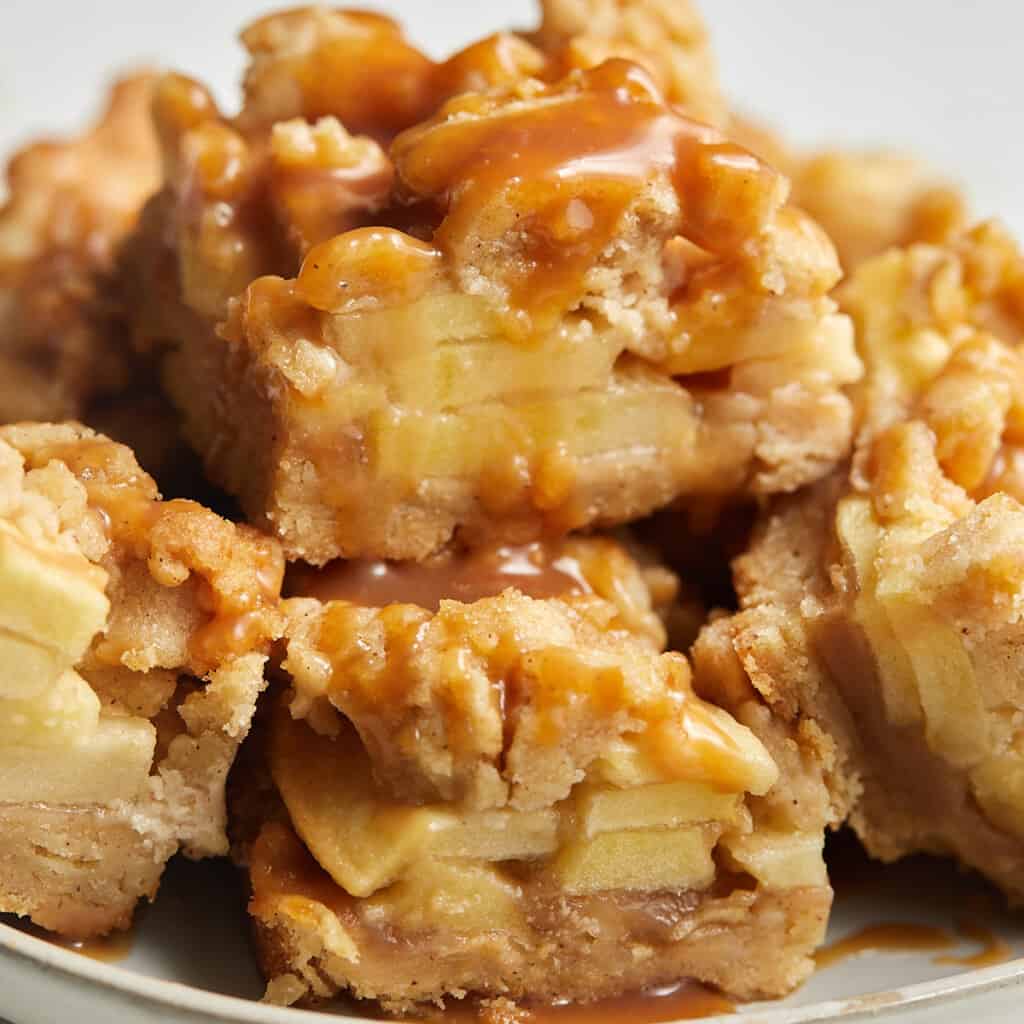
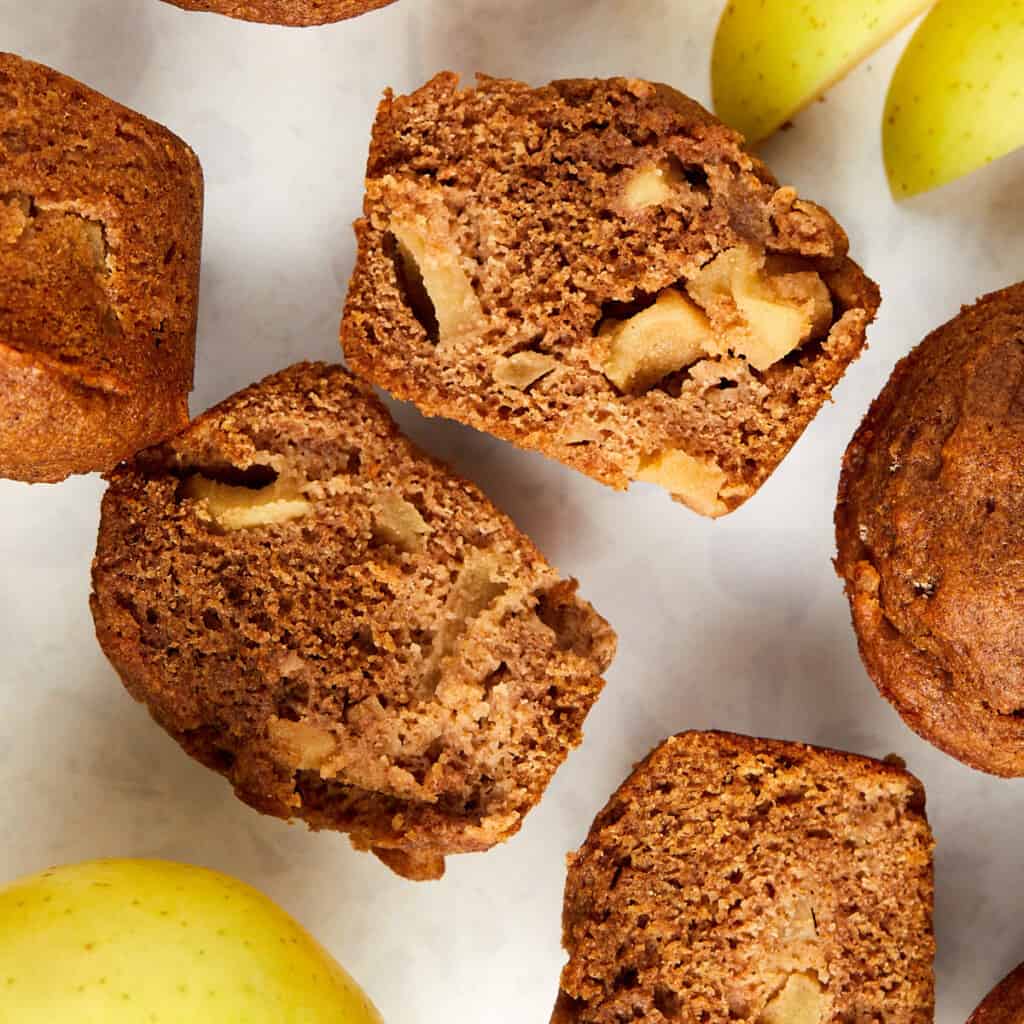
Every autumn I go back to the same one, and every autumn somebody tells me I should be blending. I am not going to. For me, the best apples for apple pie are Honeycrisp, on their own, and the second-best are whatever your store actually has this week.