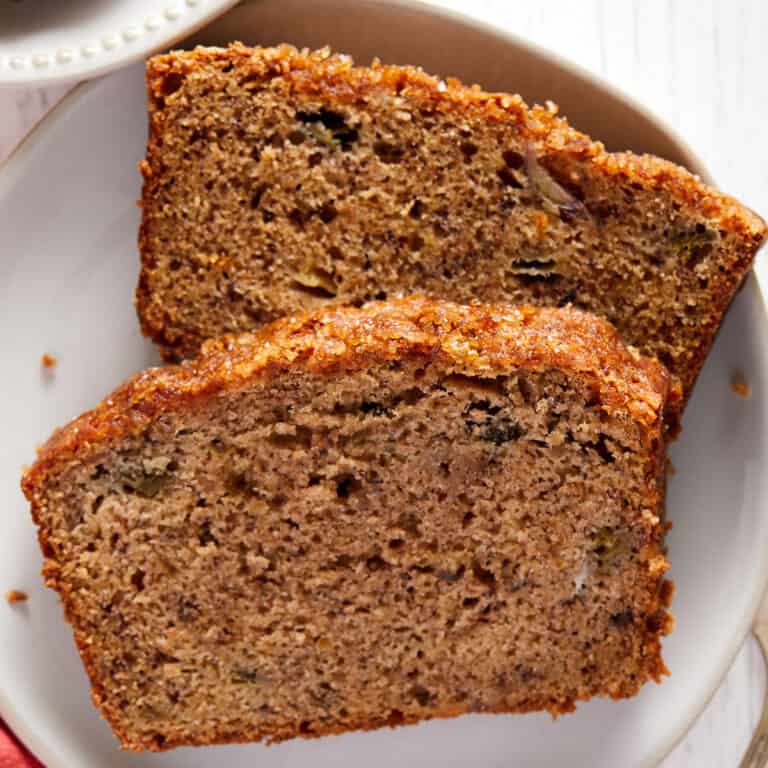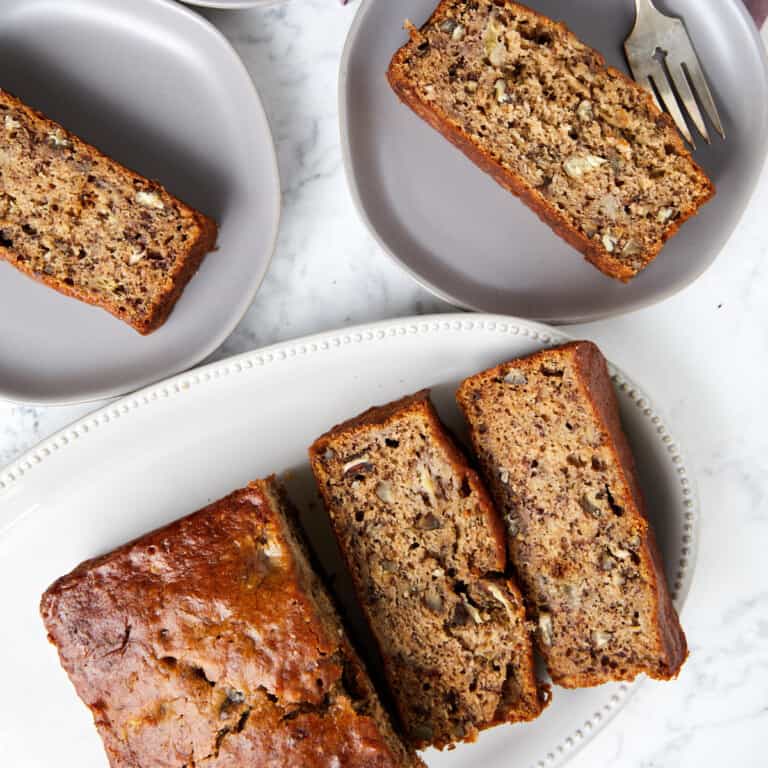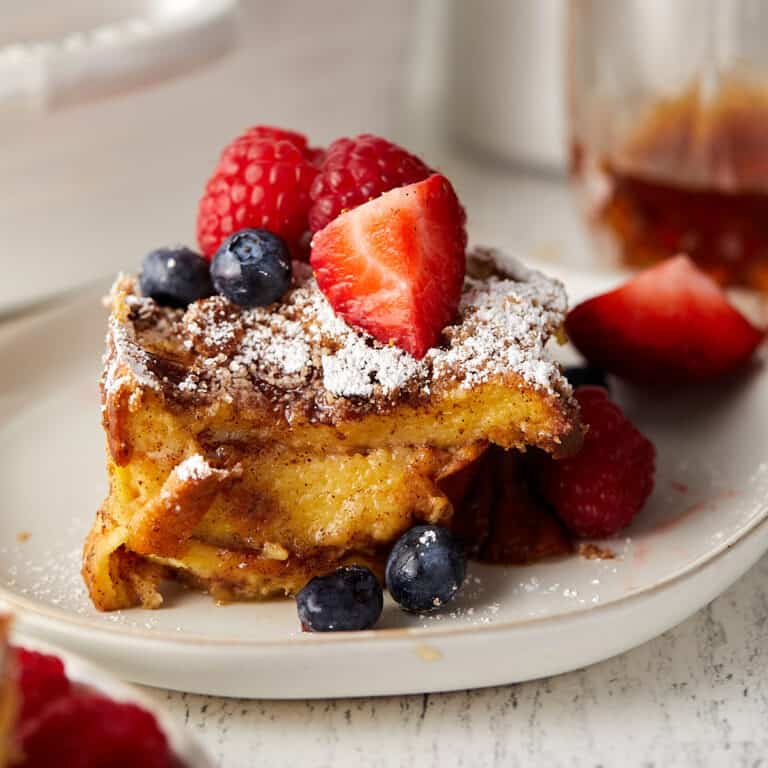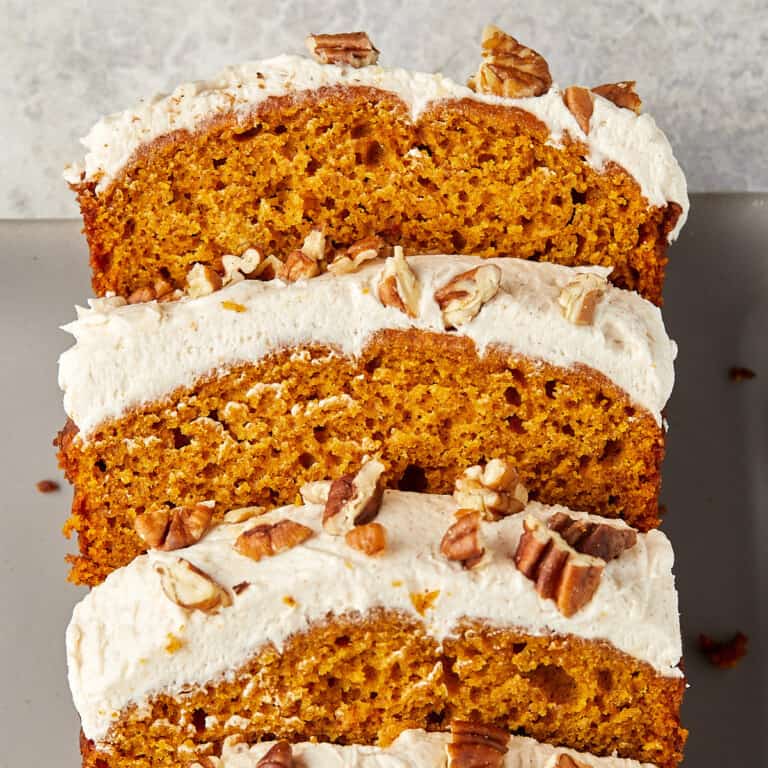


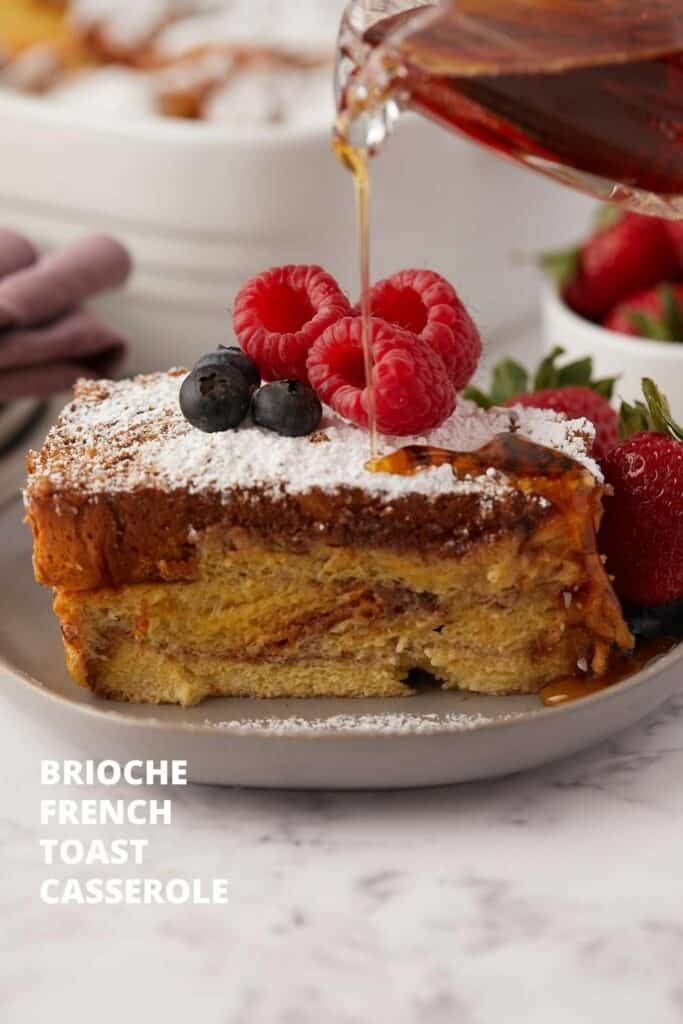
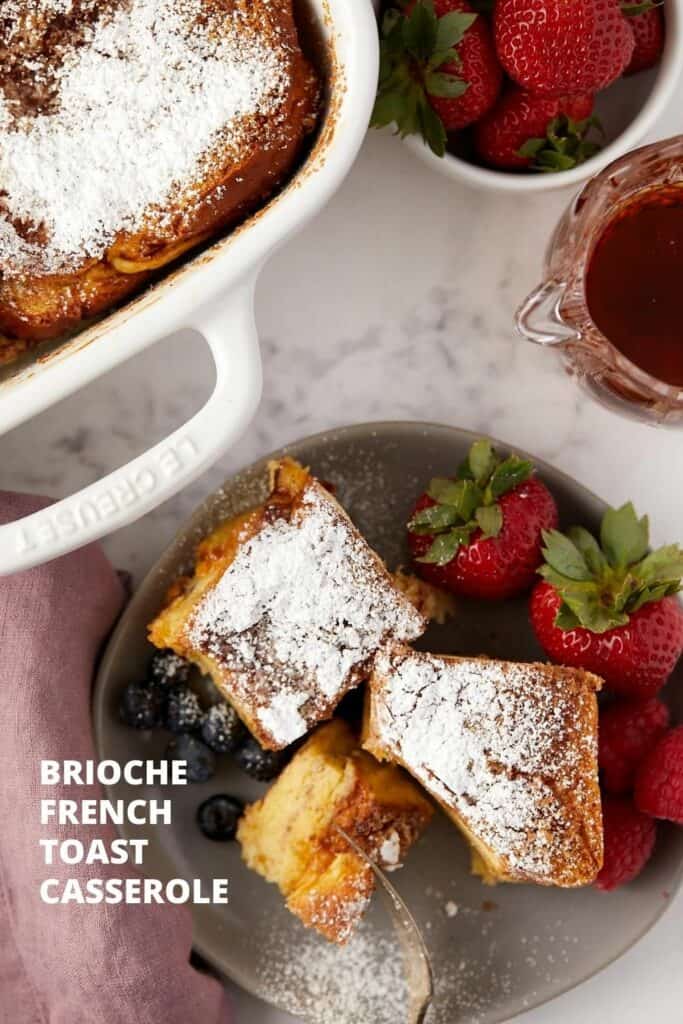
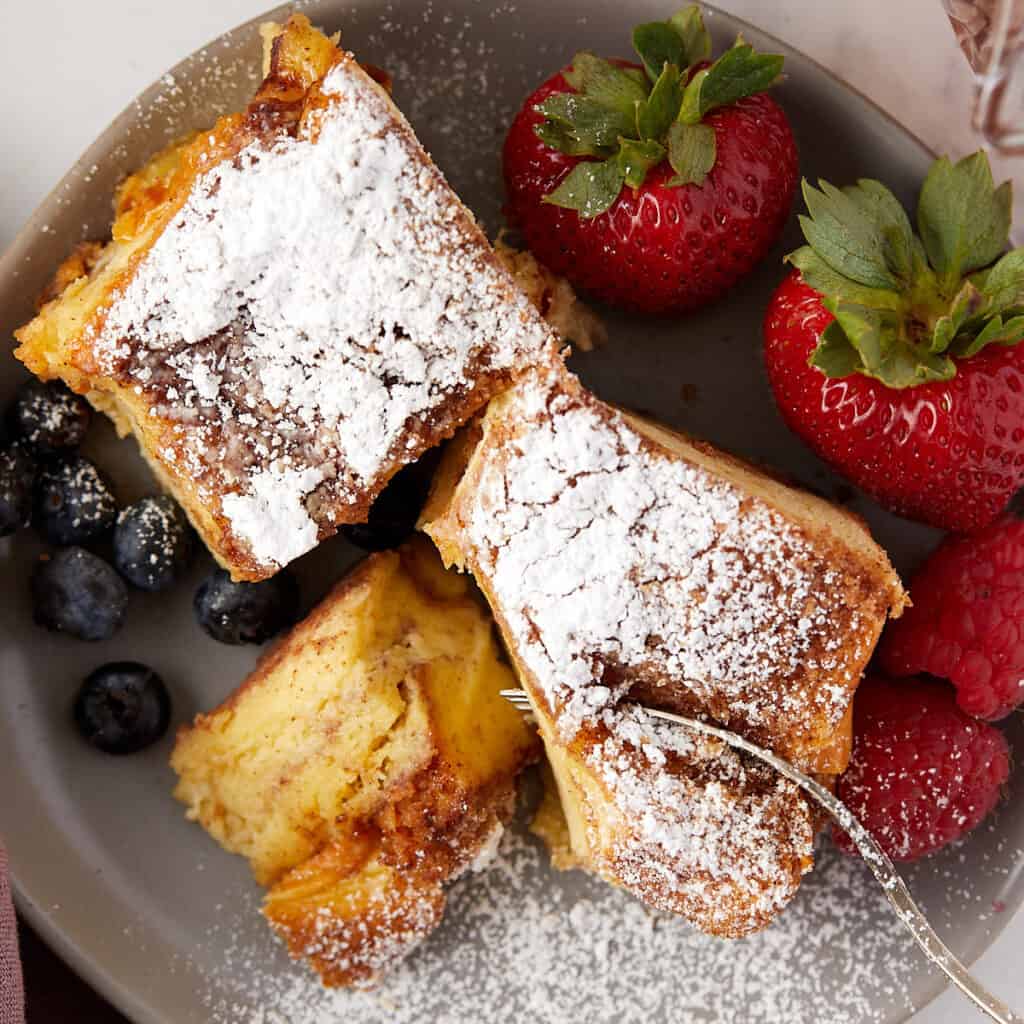
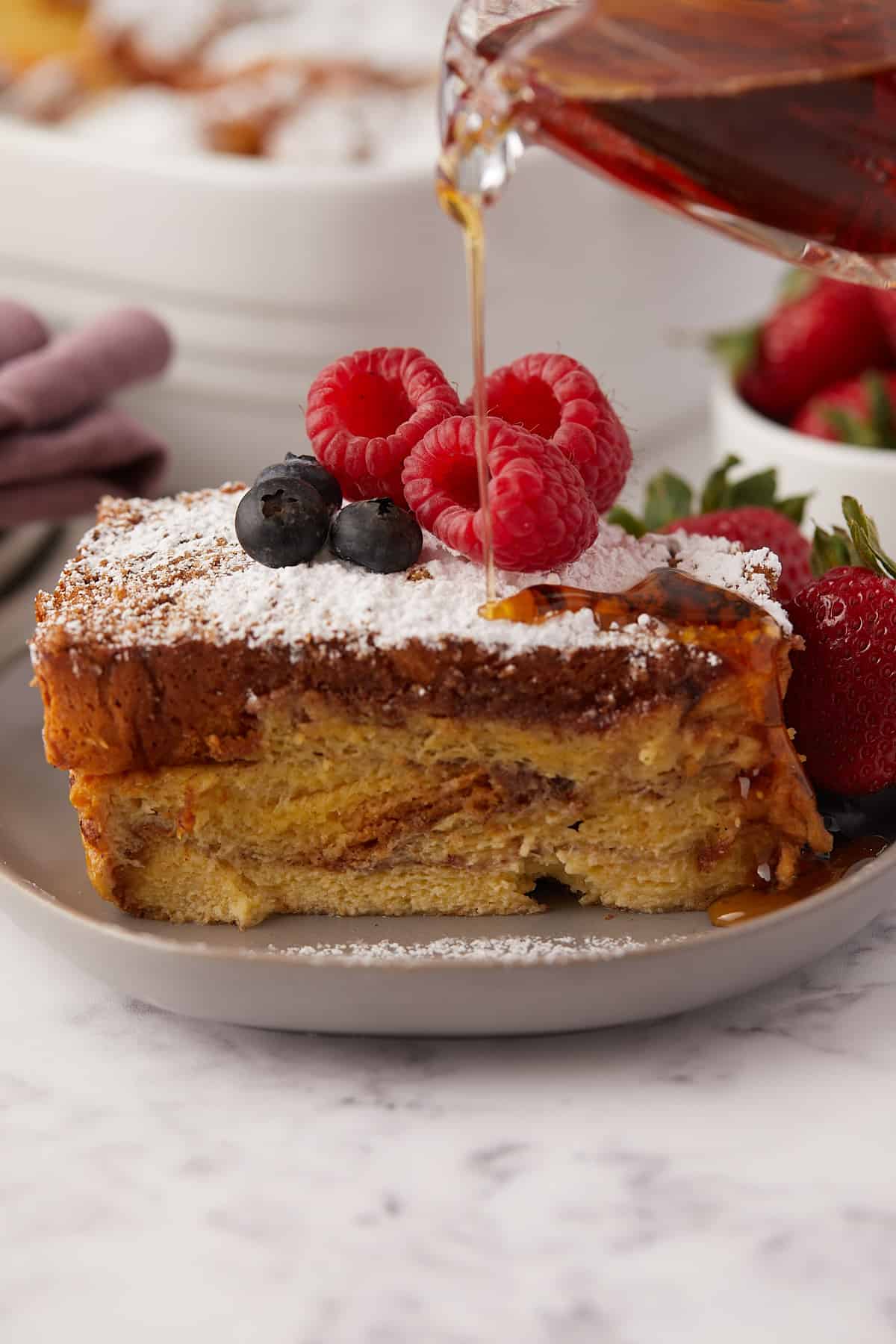
This brioche French toast casserole has been on my Christmas morning table for the last seven years, and it’s the only overnight breakfast I trust to feed a houseful of people without me touching the stove before coffee. Brioche is the whole game here; its high butter and egg content means it drinks up the custard overnight without collapsing into mush the way regular sandwich bread does.
Save this Recipe!
The trick with slices is leaving them slightly stale before the custard ever touches them. I pull the brioche bread out of the bag and let it sit on the counter, uncovered, for an hour or two. Fresh-from-the-bag slices turn to mush; slightly stale slices hold their shape, soak evenly, and give you that custardy-inside, crisp-edged top that’s the whole reason anyone makes this in the first place.
Want a lighter, less buttery version? See my overnight challah French toast casserole for that one. If you’re building out a holiday brunch spread, this pairs beautifully with my crustless ham and cheese quiche with leeks for the savory side of the table. Looking for a full Mother’s Day brunch menu? See my stress-free Mother’s Day brunch menu for the whole spread.
Why We Love This Brioche French Toast Casserole
- 15 minutes of active prep. Slice the bread, mix the custard, layer it up, pour, and fridge. Done before the dishwasher finishes its cycle.
- Feeds eight from one pan. A 9×13 dish covers the whole table on Christmas morning, at Easter brunch, or on a lazy Sunday with extended family.
- The make-ahead actually works. Assemble it the night before and bake it while everyone hunts for slippers. No 6 a.m. measuring.
- Brioche bread does the heavy lifting. The high butter and egg content lets the bread soak up custard without falling apart. You get custardy middles and crisp edges in the same bite.
- It freezes beautifully. Make one in October, bake it Christmas Eve. Or freeze leftovers in single portions for the world’s best weekday breakfast.
- No fancy ingredients. Brioche, eggs, milk, brown sugar, and standard pantry spices. Everything fits in one cart at Aldi.
Ingredients
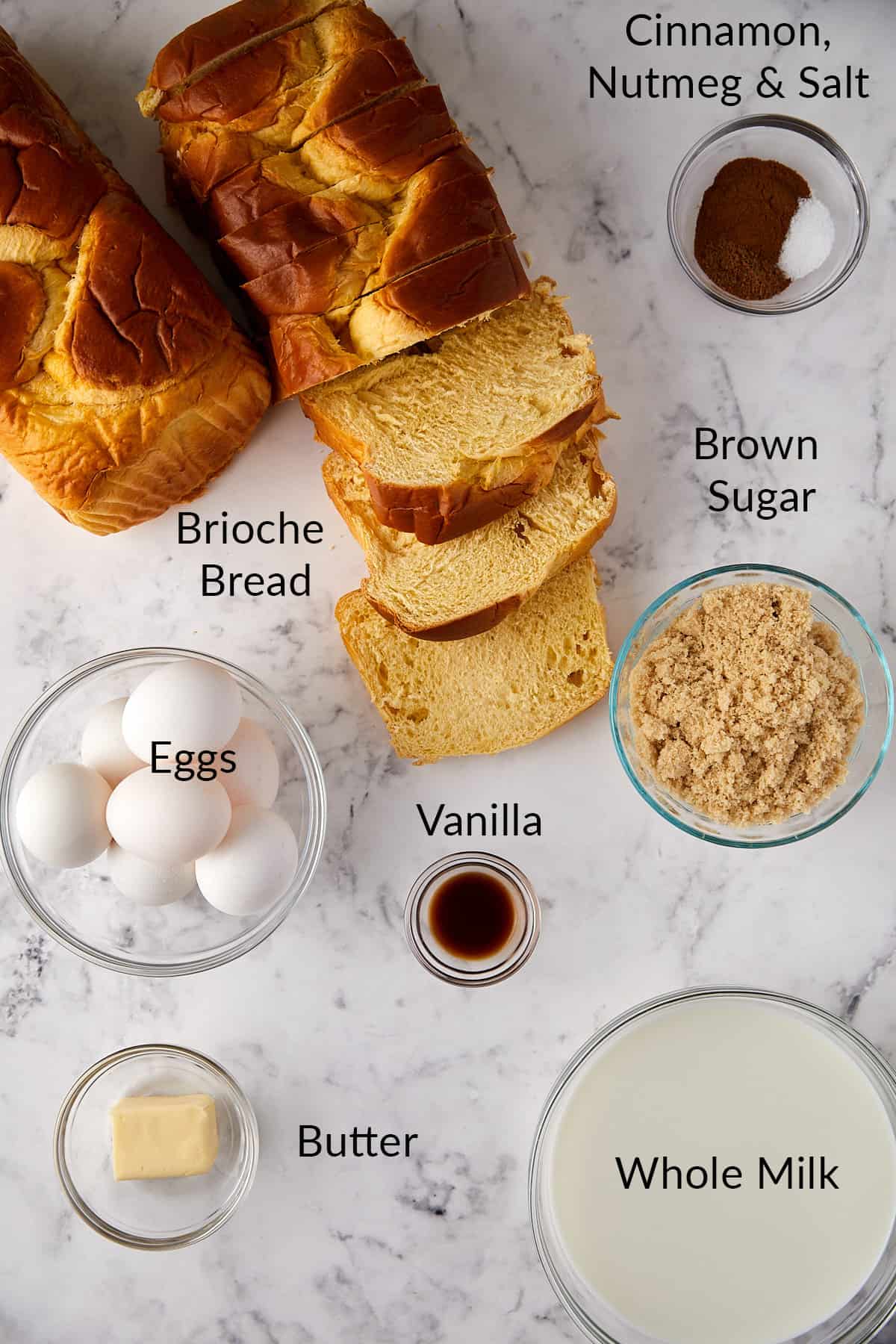
- Brioche bread — Two 14.11 oz loaves. Don’t sub regular sandwich bread, it turns to mush. Challah works.
- Whole milk — The sweet spot for this casserole. See substitutions below for half-and-half, heavy cream, or dairy-free options.
- Brown sugar — The molasses gives you that caramel-edged crispy top. Don’t swap white sugar.
- Plus eggs, vanilla, cinnamon, nutmeg, salt, butter, and confectioners’ sugar. Standard pantry. Maple syrup for serving.
See recipe card below for quantities.
Substitutions and Variations
Bread: Challah is the closest match. Sourdough or Texas Toast also work, though the casserole won’t be as buttery.
Milk: Whole milk gives the best texture. Half-and-half or heavy cream will give you a richer, denser custard if that’s what you want. Unsweetened oat or almond milk works for a dairy-free version.
Variations:
I haven’t tested variations on this casserole yet. If you’ve tried it with chocolate chips, sautéed apples, a Nutella swirl, or anything else, let me know how it turned out in the comments!
How to make Brioche French Toast Casserole
The basics of this recipe are to layer the bread, sprinkle on the sugar and spice between the layers, pour on the custard, top with butter and the rest of the spice mixture and bake. Easy peasy!
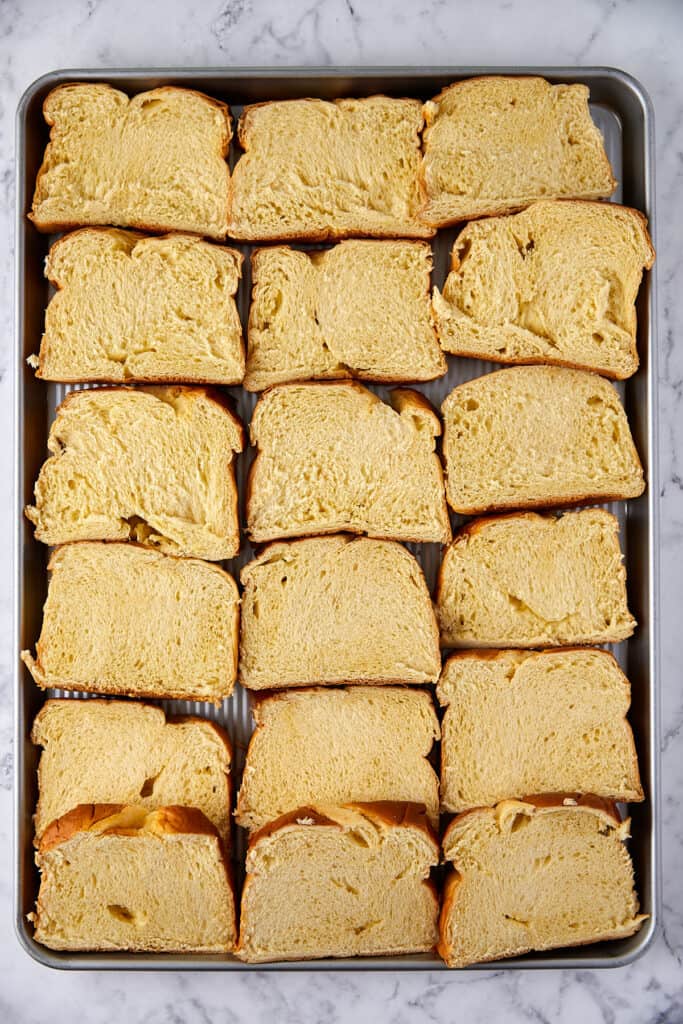
STEP 1: Let it get stale. Brioche, somewhat stale, is best for French toast casseroles. Cut the loaves into 1-inch slices, then let them sit uncovered for a few hours or up to 1 day. The less moisture in the bread, the more custard it can soak up! If you’re in a rush and don’t have time to let the bread sit out lay the bread slices on baking sheets in a single layer and bake in a 300°F (149°C) oven for 10 minutes. This is what I do most often!
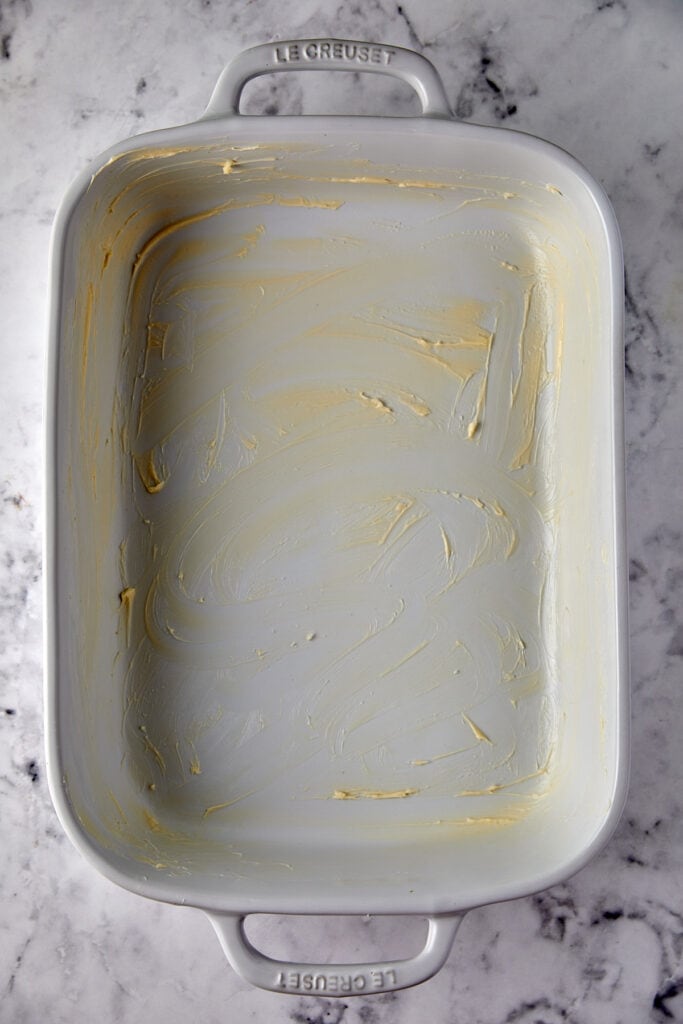
STEP 2: Generously butter a 9×13 casserole dish or any (3.5-4 -quart) baking dish, or spray with non-stick cooking spray. Here is the casserole dish pictured above. Set aside.
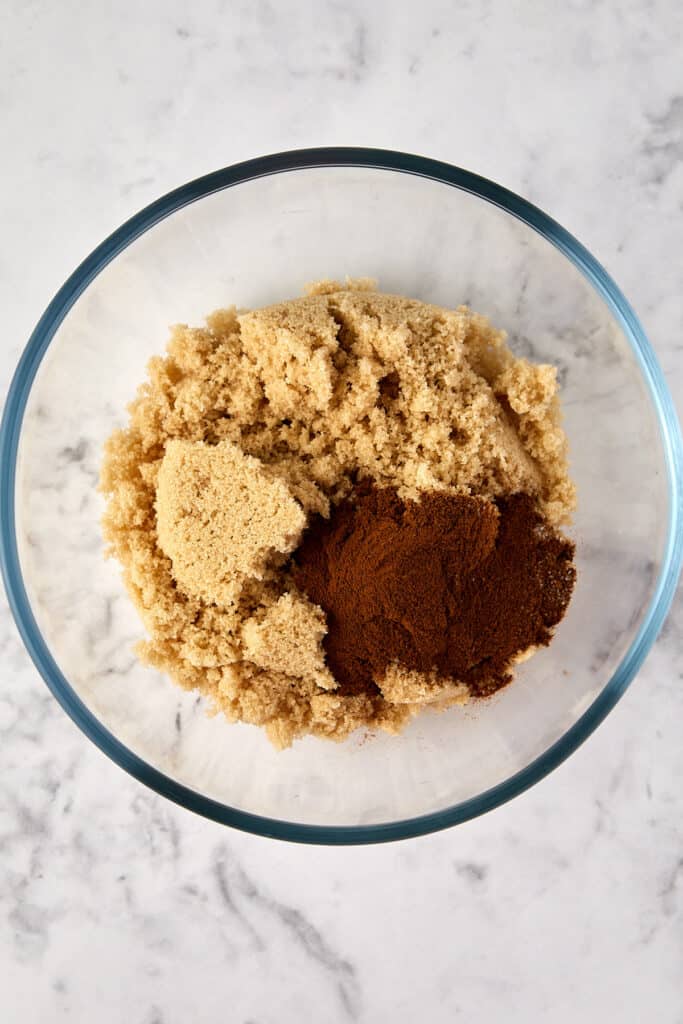
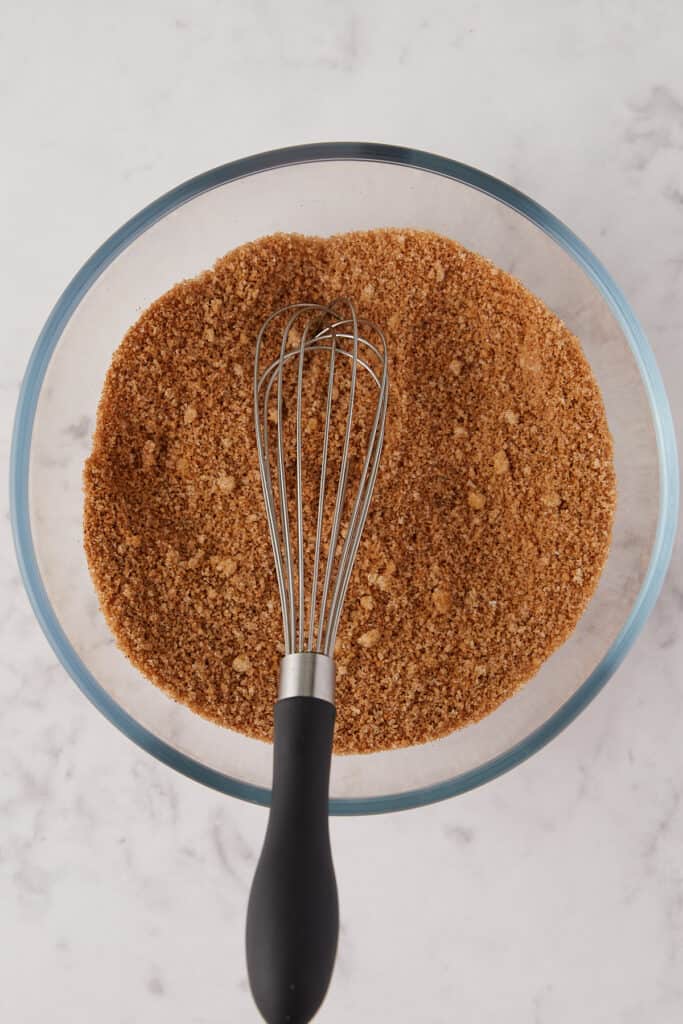
STEP 3: Mix brown sugar, cinnamon, nutmeg, and salt together in bowl. Set aside.
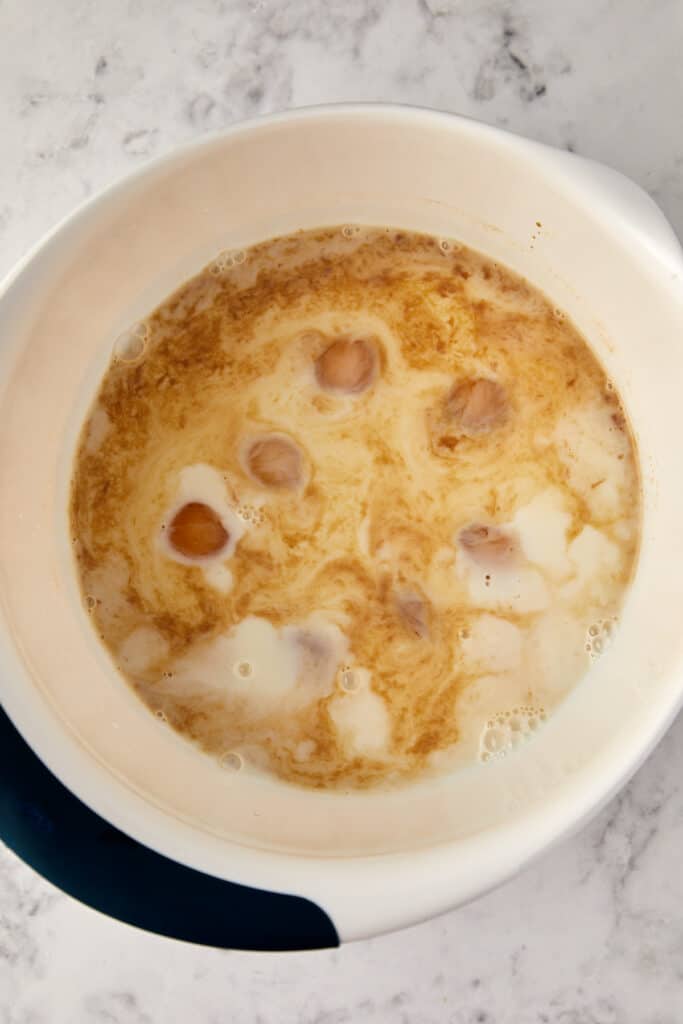
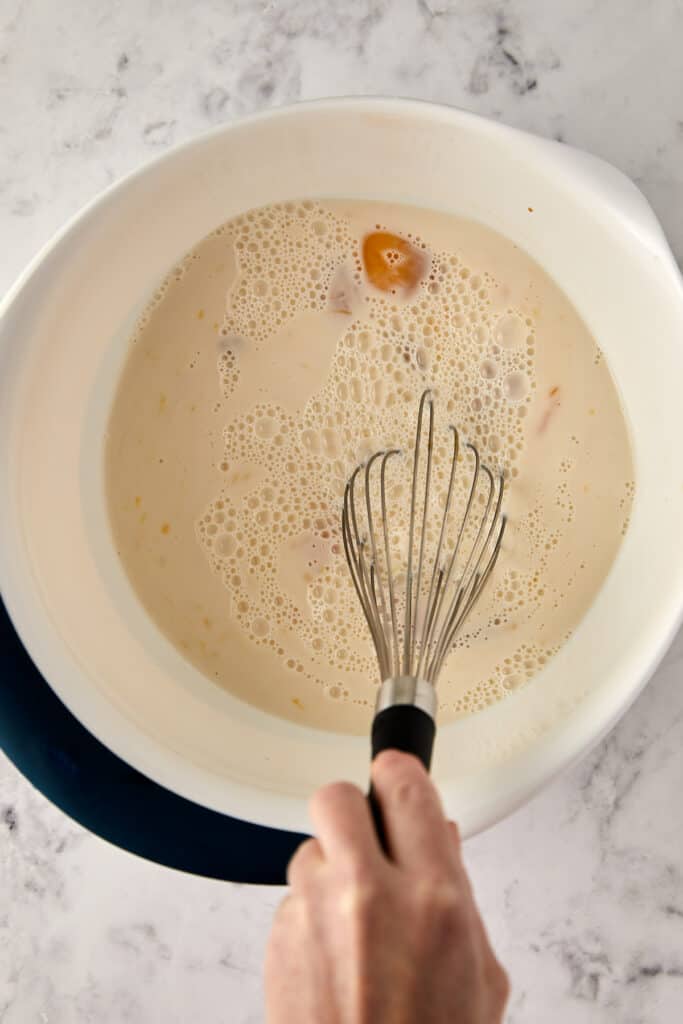
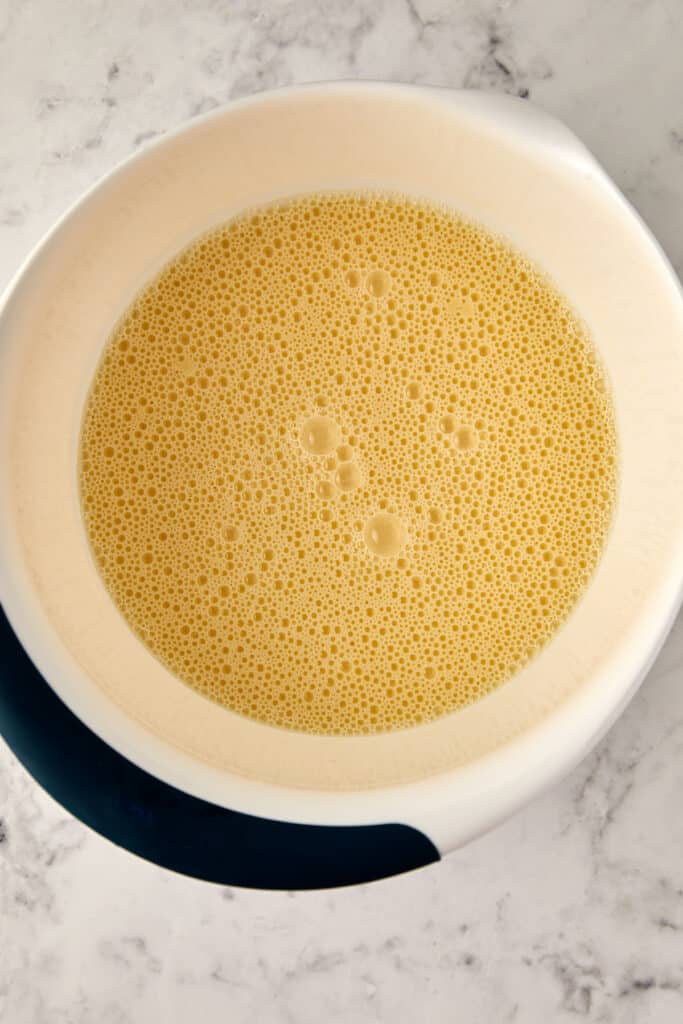
STEP 4: In a separate glass mixing bowl or bowl with a pour spout, whisk milk, eggs, and vanilla until combined.
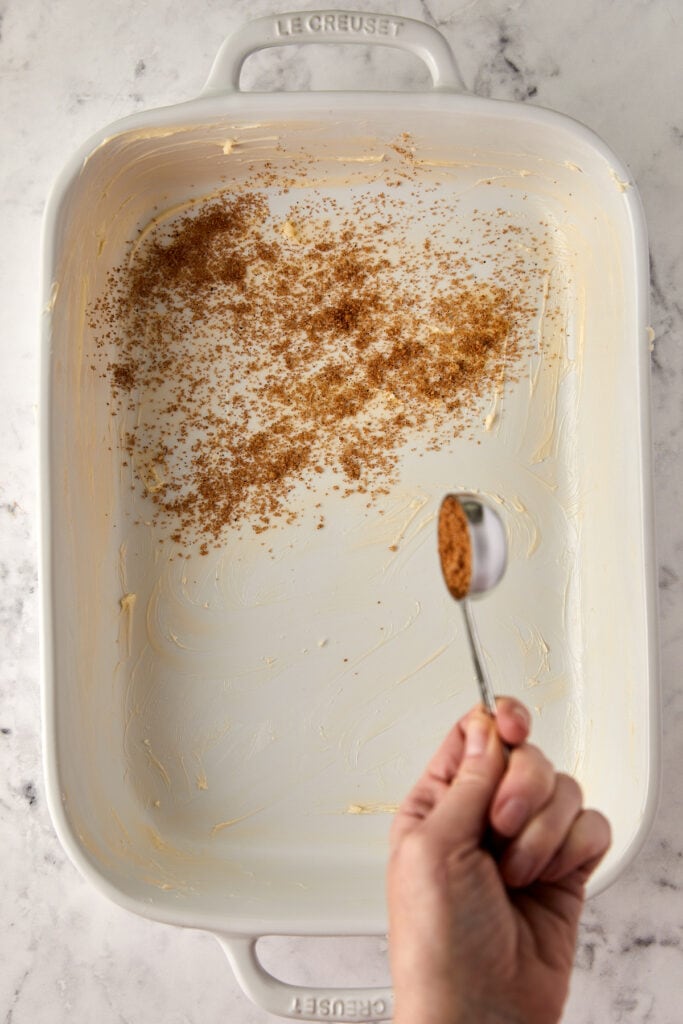
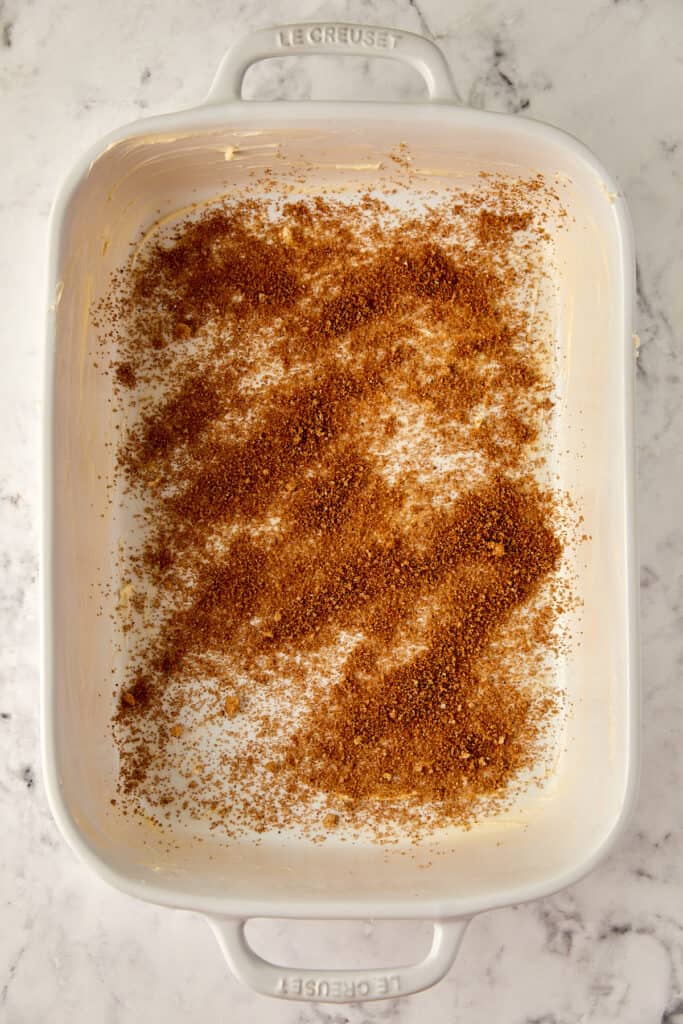
STEP 5: Sprinkle 3 tablespoons of brown sugar mixture evenly over the bottom of the prepared dish.
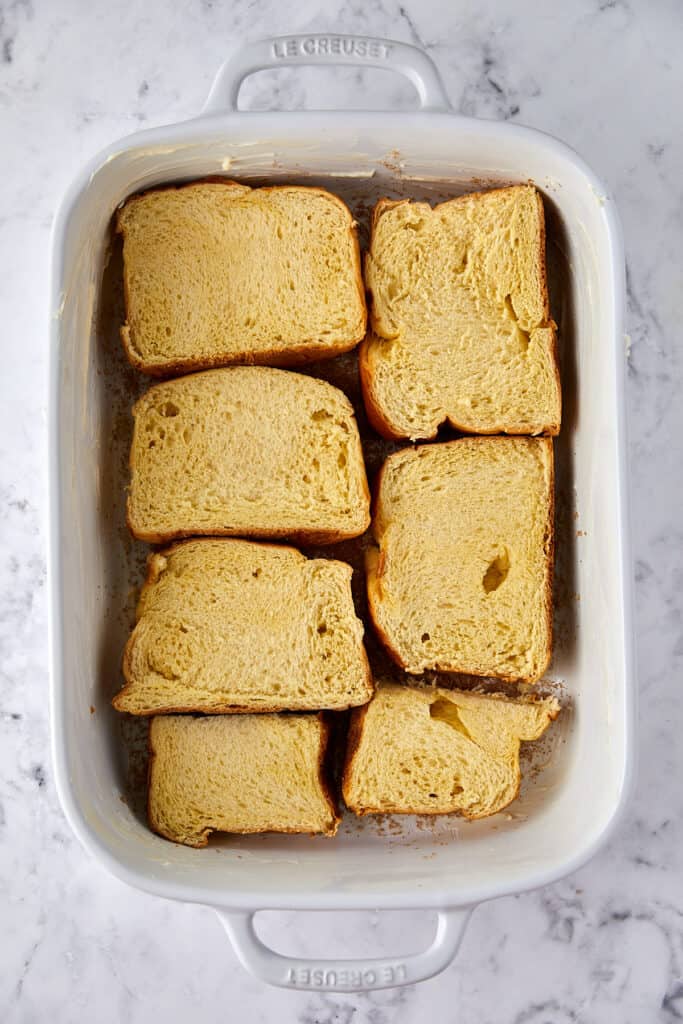
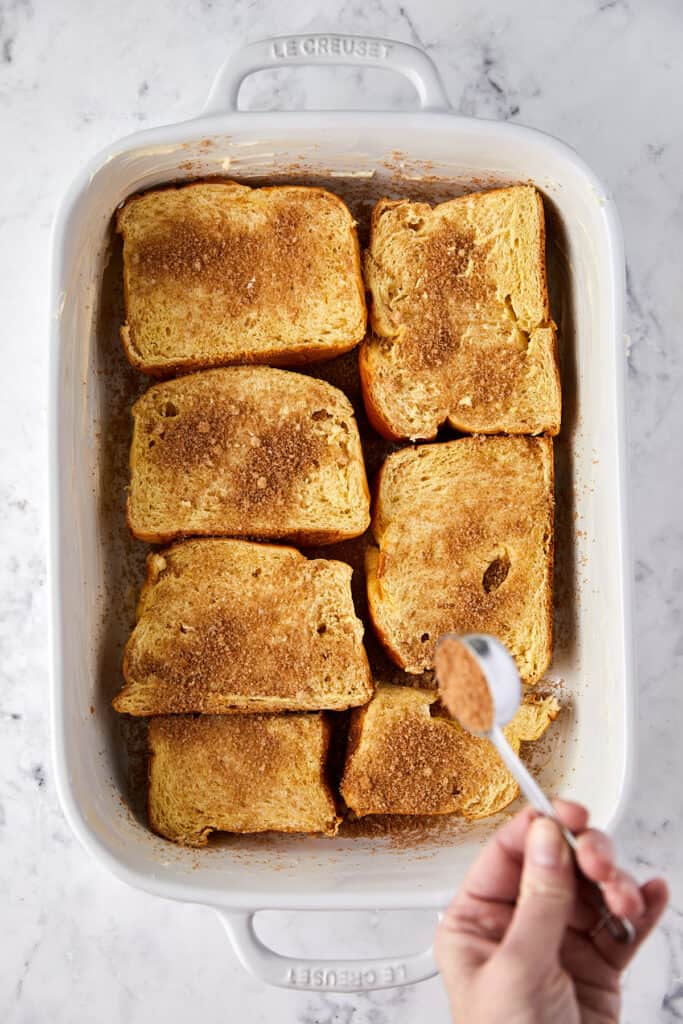
STEP 6: Place 6 bread slices (use bread heels here) in an even layer at the bottom of the dish. Brush with 2 tablespoons of melted butter and sprinkle with 3 tablespoons of brown sugar mixture. You may have to cut a slice in half to fill the dish.
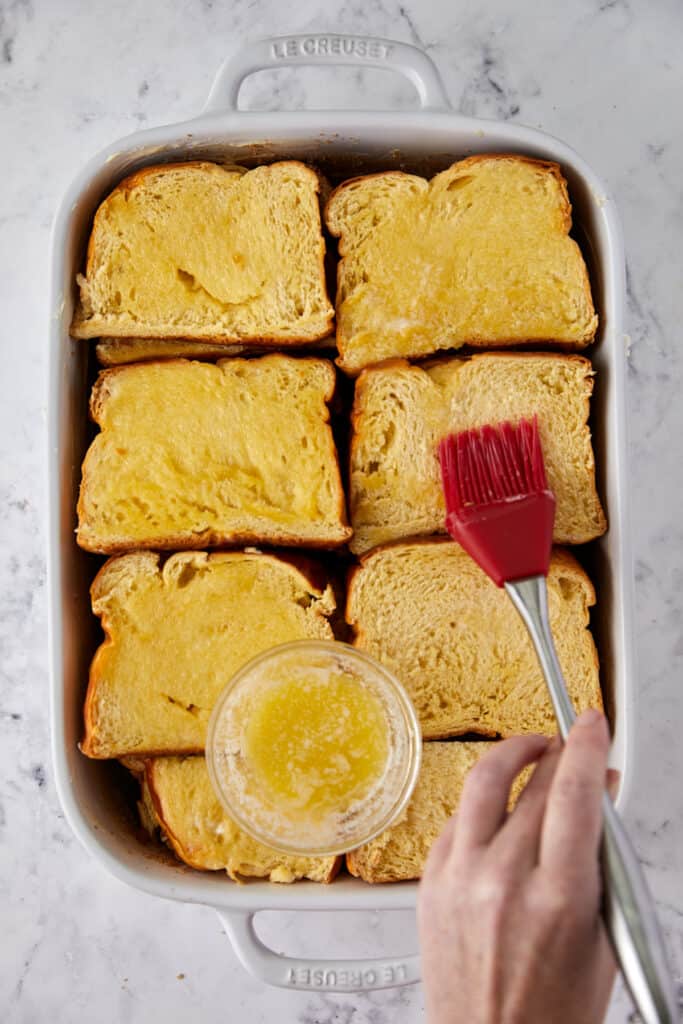
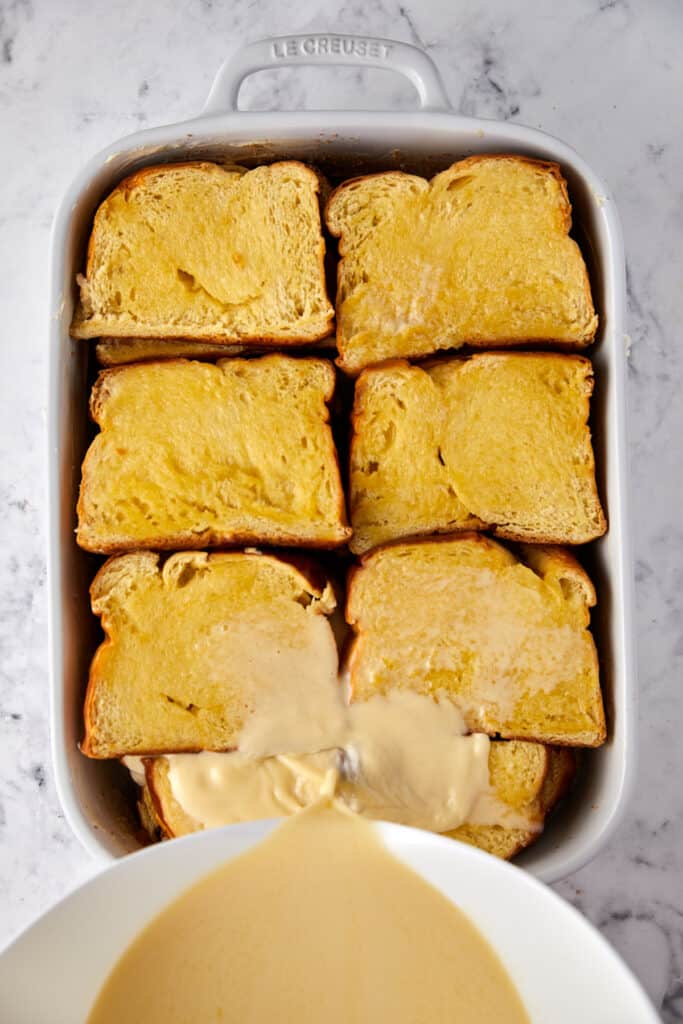
STEP 7: Arrange 6 more bread slices in a single layer over the first layer. Brush with 2 tablespoons of melted butter and sprinkle with 3 tablespoons of brown sugar mixture. Place the remaining 6 bread slices over the prior layer and brush with the last 2 tablespoons of melted butter. Gradually pour the egg and milk mixture over the bread. At this point, you can cover and refrigerate up to 24 hours, or bake right away.
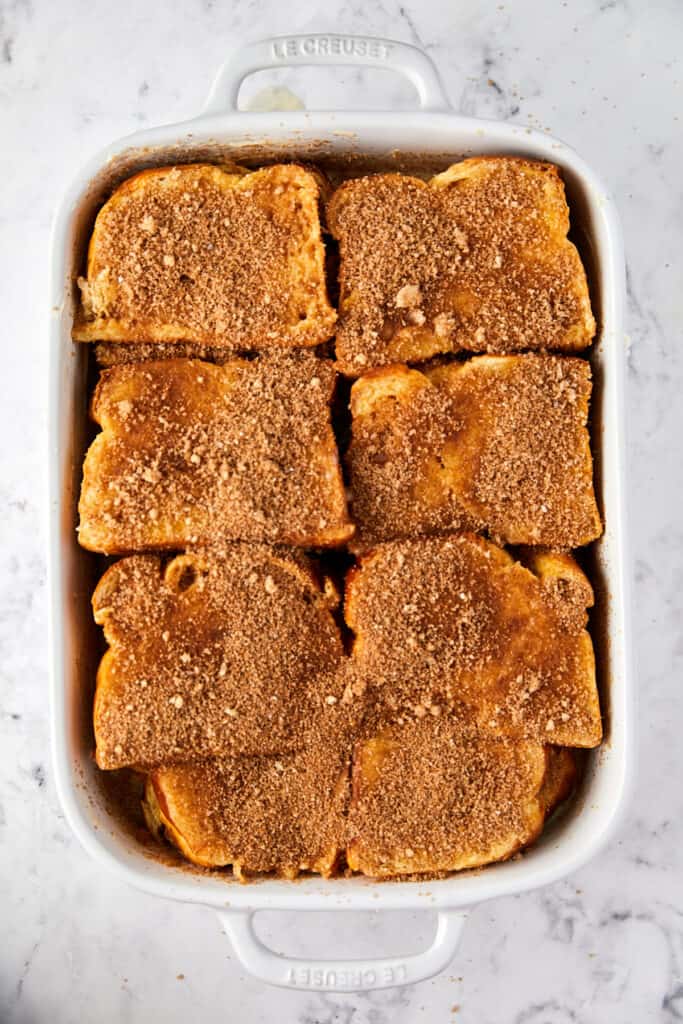
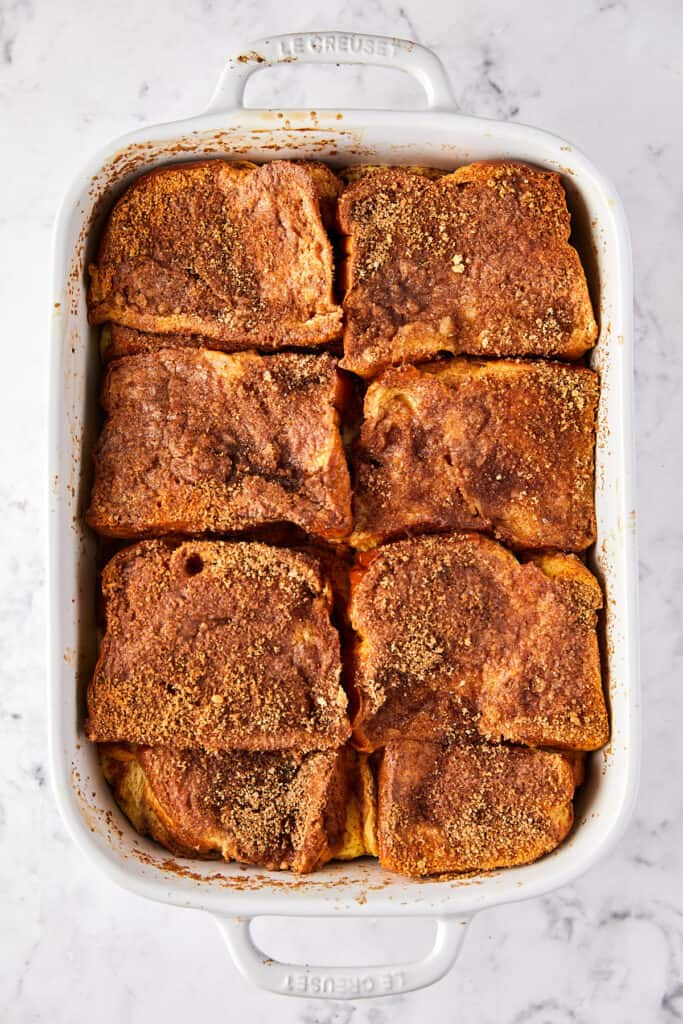
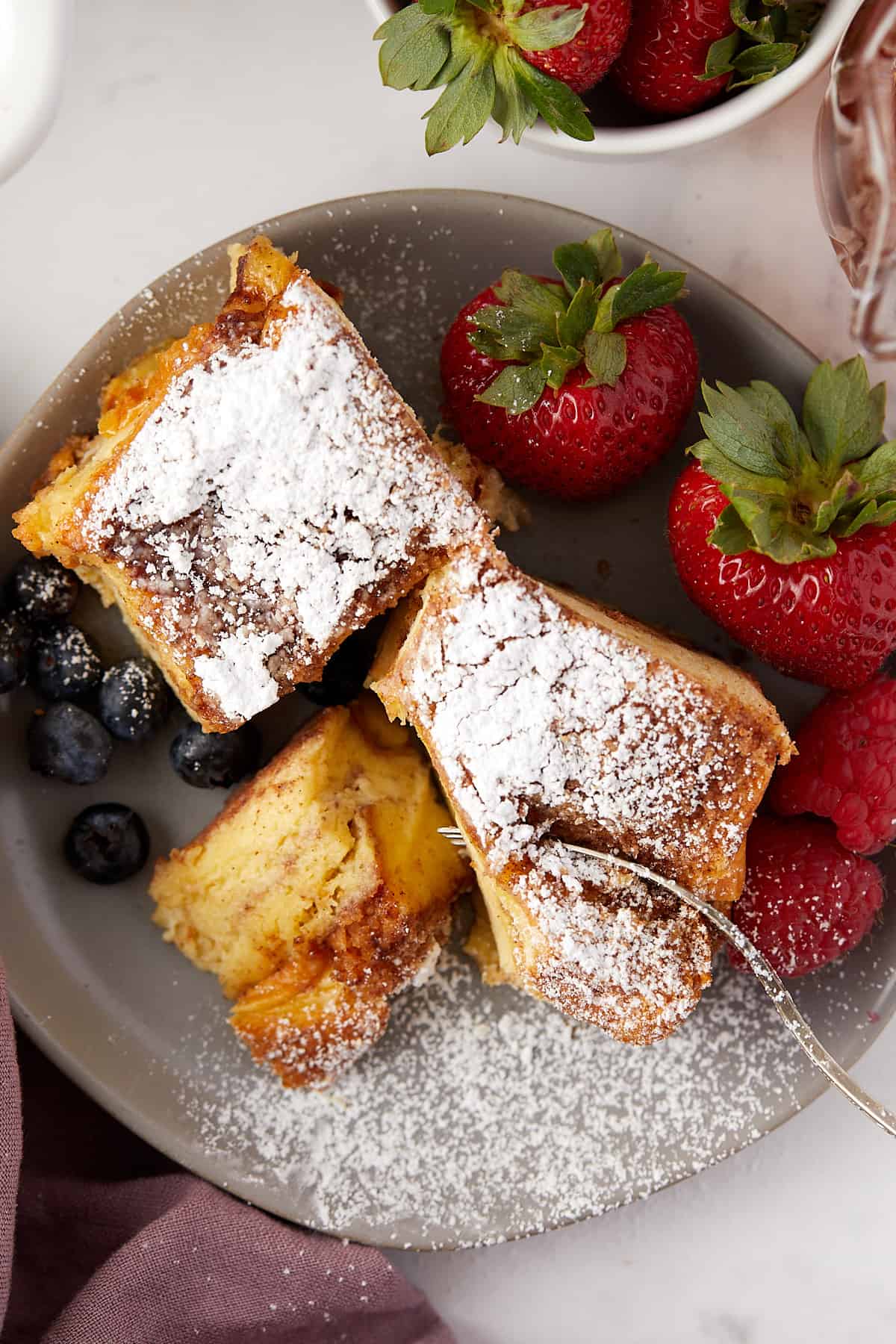
STEP 8: Sprinkle the remaining 3 tablespoons of brown sugar mixture evenly over the top of the bread. Bake at 350°F (177°C) for 45 to 50 minutes until the casserole is slightly puffed, golden brown, and bubbling around the edges. Let cool for 15 minutes on a wire rack, sprinkle with confectioners’ sugar, and serve.
Expert Tips for the Best Brioche French Toast Casserole
- Stale brioche bread is non-negotiable. Pull the slices out of the bag the night before assembly and let them sit on the counter, uncovered. Fresh slices turn to mush in the custard. If you forgot, lay the slices on a baking sheet in a single layer and bake at 300°F for 10 minutes to dry them out. Dry bread soaks up custard evenly without falling apart, which is why King Arthur Baking explains stale bread is the secret to good French toast.
- Don’t worry if the custard doesn’t cover the bread. The bread is designed to soak from the bottom up while it sits in the fridge. The top layer staying drier is what gives you the crispy, golden top after baking. If you try to submerge the bread, you lose the texture contrast that makes this casserole work.
- Start checking at 40 minutes. The casserole is done when the top is puffed and deeply golden. If you have an instant-read thermometer, aim for 175 to 190°F in the center (160°F is the USDA safety minimum for egg dishes, but 175°F+ is where the custard is fully set with no wet middle). If the top browns too quickly, loosely tent with foil after about 45 minutes.
- Rest 15 minutes before cutting. Pull it out of the oven and walk away. The custard finishes setting as it cools. Cut too soon and you’ll get a wet, scrambled-looking middle instead of clean custardy slices.
Storage
Refrigerator
Leftovers keep for 3 days in an airtight container. The custard tightens up in the fridge, so the casserole gets denser and a little drier. That’s normal, not ruined.
Reheating
Individual portions go in the oven at 325°F for 10 minutes, covered loosely with foil. The microwave works in a pinch but the bread goes rubbery.
Make-Ahead and Freezing
This casserole holds in the fridge unbaked for up to 24 hours per USDA’s safe egg handling guidelines for raw egg dishes. It also freezes unbaked for up to 2 months and freezes baked leftovers for up to 3 months. See the recipe card below for step-by-step instructions on make-ahead, freezing, halving, and doubling.
What to Serve With Brioche French Toast Casserole
The casserole is sweet and rich, so the rest of the menu should bring salt, protein, and acid to balance it out.
For the savory side of the table, the ham and cheese quiche I mentioned above is my go-to (same oven temperature, holds its own next to the casserole, uses up leftover holiday ham). Bacon or breakfast sausage works too if you want something that travels more easily.
For something fresh, fruit is non-negotiable in my house. A bowl of berries, sliced melon, or my favorite cheat: a bag of frozen mixed berries thawed and tossed with a little maple syrup. The acid cuts through the custard and resets your palate between bites. If you want to dress it up, top a bowl of yogurt and fresh fruit with my maple pecan cinnamon granola for crunch.
For drinks, cold brew or fresh-squeezed orange juice handles the adults. If you want something fancier, a sparkling cider mimosa bar (sparkling apple cider, orange juice, and a splash of pomegranate or peach puree) gives you the same Sunday-brunch energy. A pitcher of milk with chocolate syrup on the table handles the kids.
FAQ’s

Recipe
Brioche French Toast Casserole
Equipment
- 9×13 Baking Dish (3.5 to 4 quart capacity)
- Large Mixing Bowl with Pour Spout
Ingredients
- 1 tablespoon unsalted butter softened, plus 6 tablespoons unsalted butter, melted
- 3/4 cup packed (165 grams) brown sugar
- 1 tablespoon ground cinnamon
- 1/2 teaspoon ground nutmeg
- 1/2 teaspoon Diamond Crystal kosher salt; for table salt, use half as much by volume or use the same weight
- 18-19 slices brioche bread 2 (14.11 oz) loaves cut into 1 inch slices
- 2 ½ cups whole milk
- 6 large eggs
- 1 teaspoon vanilla
- Confectioners’ sugar and maple syrup for serving.

Instructions
- Generously butter a 9-by-13-inch baking dish (or any 3.5 to 4-quart baking dish) or spray with nonstick spray.
- Whisk brown sugar, cinnamon, nutmeg, and salt together in a bowl. Set aside.
- Sprinkle 3 tablespoons of the brown sugar mixture evenly over the bottom of the prepared dish.
- Place 6 bread slices (use bread heels here) in an even layer at the bottom of the dish. Brush with 2 tablespoons of melted butter and sprinkle with 3 tablespoons of brown sugar mixture. You may have to cut a slice in half to fill the dish.
- Arrange 6 more bread slices in a single layer over the first layer. Brush with 2 tablespoons of melted butter and sprinkle with 3 tablespoons of brown sugar mixture.
- Place the remaining 6 bread slices over the previous layer and brush with the remaining 2 tablespoons of melted butter.
- In a separate bowl, whisk eggs, milk, and vanilla together until well combined.
- Pour the egg and milk mixture evenly over the bread, pressing lightly to submerge.
- Cover the pan tightly with plastic wrap and refrigerate for at least 4 hours or up to 24 hours. (Or bake immediately if you don't have time to soak.)
- Preheat the oven to 350°F (177°C). Remove the pan from the refrigerator about 20 minutes before baking. Sprinkle the top with the remaining 3 tablespoons of brown sugar mixture.
- Bake at 350°F (177°C) for 45 to 50 minutes until slightly puffed, golden brown, and bubbling around the edges. The custard is fully set when the internal temperature reaches 175 to 190°F (79 to 88°C). If the top browns too quickly, loosely tent with foil after about 45 minutes.
- Let cool for 15 minutes on a wire rack, sprinkle with confectioners' sugar, and serve.