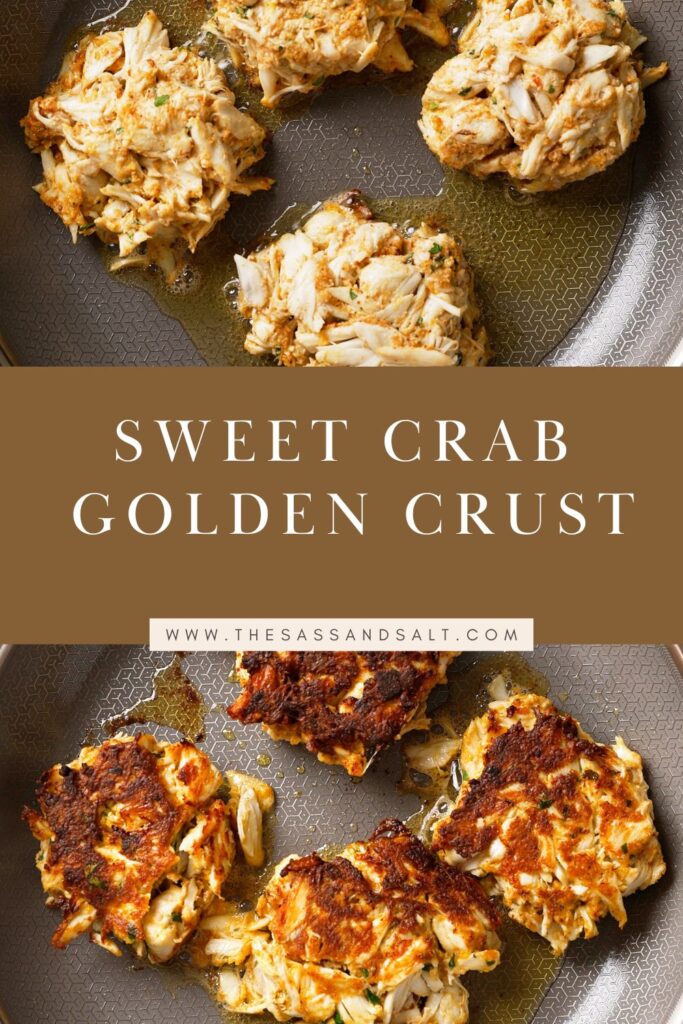
Good Maryland crab cakes should taste like crab, not breadcrumbs. I grew up in Southern Maryland, on the Chesapeake Bay, where we had crab feasts every single weekend: my dad steaming bushels of blue crabs in beer and a heavy shower of Old Bay, all of us picking crab across a newspaper-covered table for hours. So I do not say this lightly: these are the best crab cakes I have ever made, and the closest I have come to the perfect Maryland crab cake.
Save this Recipe!
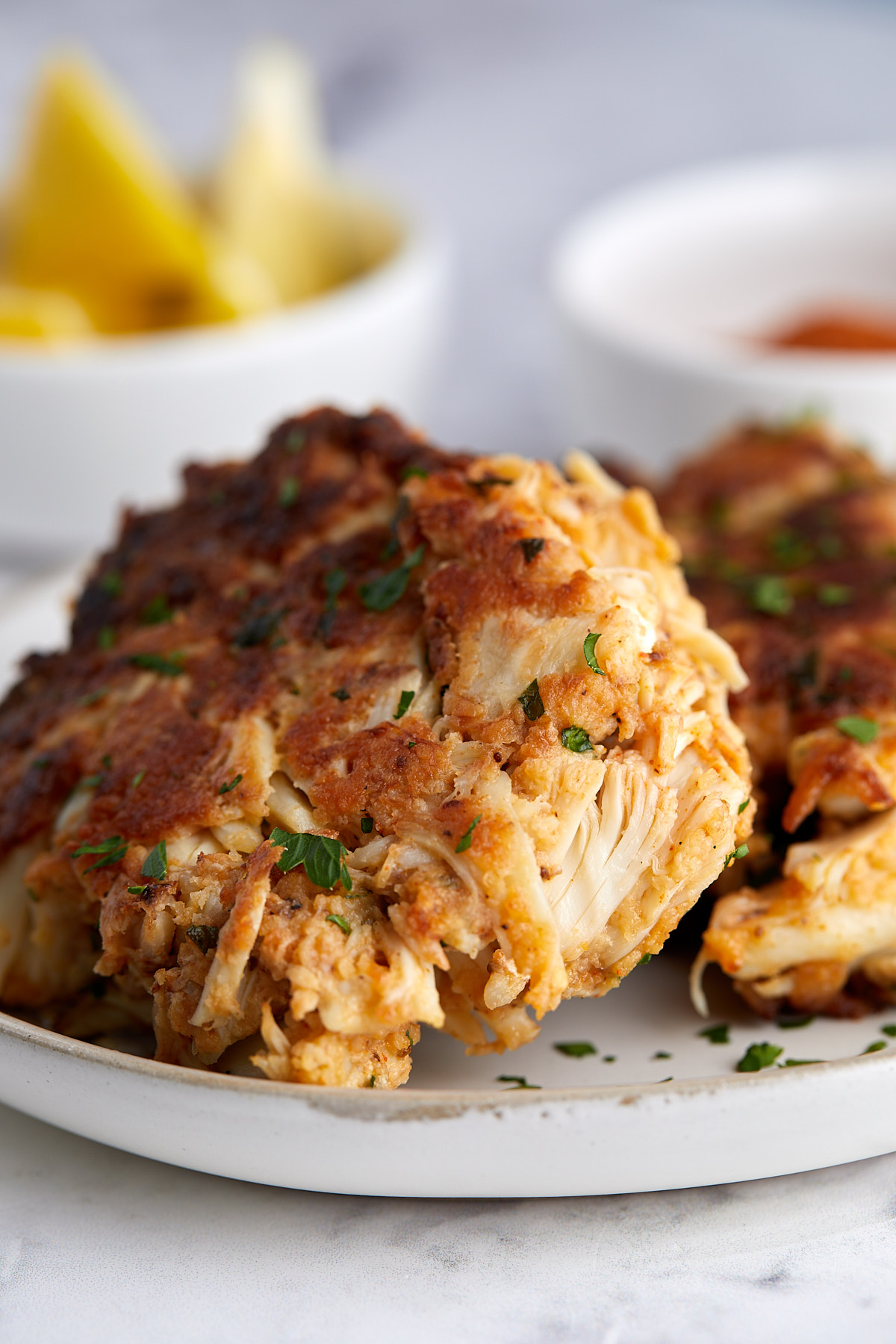
Done right, these are almost all sweet crab, with just enough binder to hold, and about 35 minutes plus a short chill is all they take. The real secret is that chill. A quick cold rest firms the cakes so they hold together in the pan and fry up with a crisp, golden crust. No filler crutch, no fuss, just crab that tastes like crab.
Here is the honest part: I do not live in Maryland anymore, so fresh crab off the boat is not in the cards. I make these with canned jumbo lump, and they are still the best crab cakes I have ever made. If a can is all you can get, you are in exactly the right place.
My husband and my daughter go crazy for these. My other kiddo, Chase, is more of a plain-crab kid, happier picking a steamed crab than eating it in cake form, and after the crab feasts I grew up on, I completely get it.
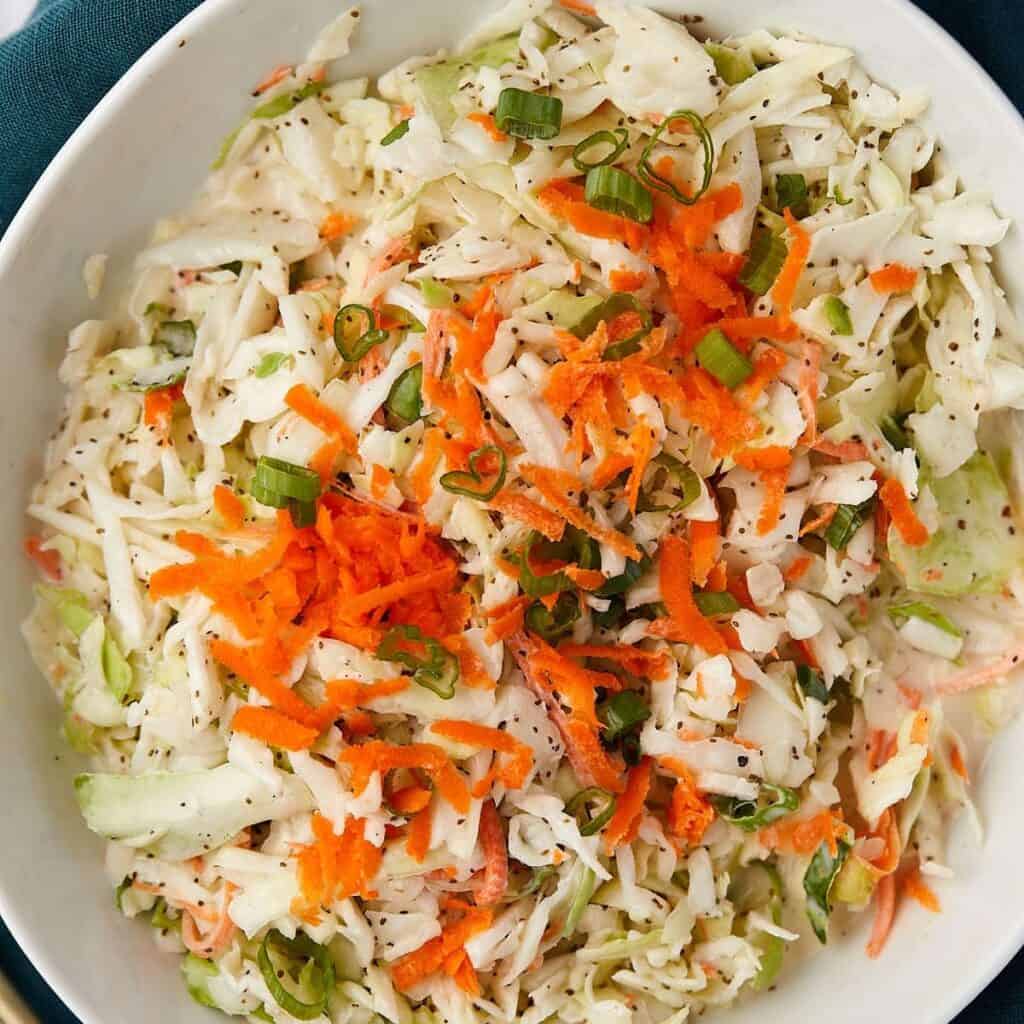
We always serve them the way my family did on the bay: with a big bowl of my creamy coleslaw alongside.
Why You’ll Love This Recipe
- Almost all crab. Just enough binder to hold a cake together, so every bite tastes like sweet lump crab, not stuffing.
- Just mix, chill, and pan-fry. No special coating, no fuss. Three simple moves and dinner feels like an occasion.
- 35 minutes, plus a chill. Active time is short. The fridge does the hard part while you set the table.
- A real Old Bay edge. The seasoning every Maryland kitchen reaches for, in the right amount.
- Make-ahead friendly. Shape them in the morning, chill all day, and pan-fry right before dinner.
The best crab meat for Maryland crab cakes
Growing up on the bay, I knew crab before I knew much else, and the grade you buy makes or breaks a crab cake. The names tell you the size and the price: jumbo lump is the largest, whole pieces from the swimming legs and the most expensive; lump is smaller broken pieces of that same prized meat; backfin is a mix of smaller lump and flake; and claw is darker, stronger, and cheapest. For Maryland crab cakes, you want jumbo lump or lump so the cakes are full of big, sweet, intact pieces.
Now that I am away from the Chesapeake, fresh crab is hard to find, so I buy the good canned jumbo lump instead, and it still makes a wonderful crab cake. My go-to is Chicken of the Sea Wild Caught Premium Jumbo Lump, the refrigerated kind. Look for it in the refrigerated seafood case, not on the shelf with the pantry cans. I will be honest with you: at around $50 a pound, it is a splurge, so these are my special-occasion crab cakes, and worth it. Drain it well, then give it a quick pick-through for any bits of shell before you mix, just to be safe, no matter the brand. Give it a quick, gentle pick-through for shell before you mix, careful not to break up the lumps. Premium lump crab is already cooked, so you are heating it through and browning the outside, not cooking raw seafood. (See the recipe card below for full measurements.)
Ingredients
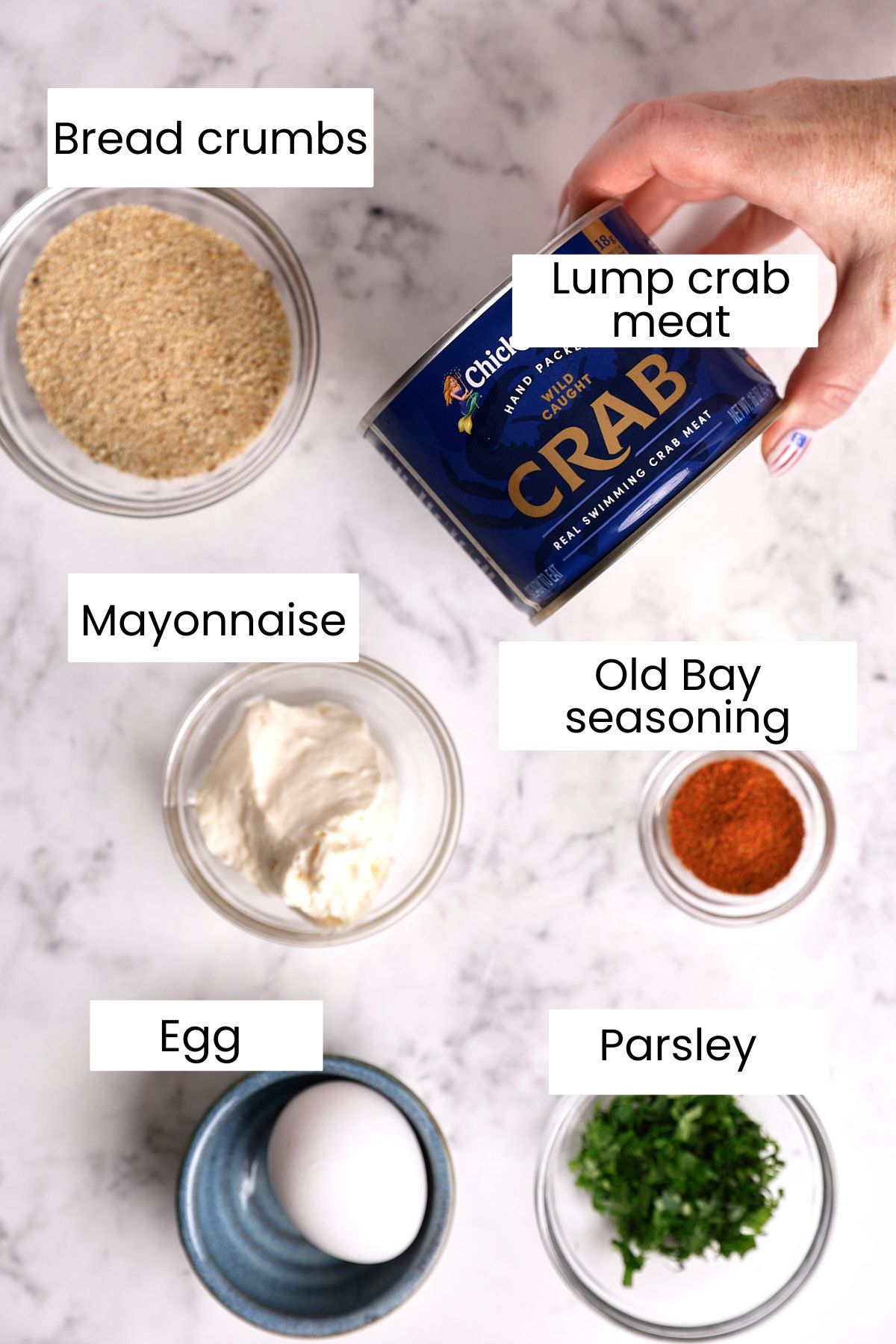
- Jumbo lump crabmeat: the star. I use Chicken of the Sea Wild Caught Premium Jumbo Lump, the refrigerated kind, about $50 a pound and worth it for a special dinner. Drain it well, give it a quick pick-through for shell, then fold it in gently to keep the lumps whole.
- Mayonnaise: the main binder along with the egg. I use Hellmann’s. It is mild, so it holds the cake without competing with the crab.
- Fine dry breadcrumbs: start with the full 1/4 cup. The mixture will feel loose before the chill, and that is normal; the chill is what firms it, not extra breadcrumbs. If it still will not hold together after a full chill, a little more is fine; just know more breadcrumbs means less crab flavor.
- Old Bay seasoning: the Maryland signature. A little goes a long way, so measure rather than eyeball.
- Fresh parsley: a clean, green note that stays out of the crab’s way. I skip dill here; it is strong enough to pull the flavor away from the sweet crab.
See the recipe card below for full measurements.
Substitutions and Variations
- Crab grade. Lump instead of jumbo lump saves money and still makes a very good cake. Backfin works if that’s what your store has; you just lose the big showy pieces. Skip the claw meat here; it is too strong and will take over.
- Breadcrumbs. Panko is coarser and drinks up more moisture than fine dry breadcrumbs, so start with less and expect a slightly different texture. I have not tested this recipe with panko.
- Herbs. Chives work in place of parsley. I would still skip dill; it pulls the flavor away from the crab.
- Make them small. Shape 12 two-inch cakes instead of 4 big ones for a party. Same chill, cut the fry time to about 3 minutes a side. I have not tested this exact timing.
This recipe has not been tested with other substitutions or variations. If you replace or add any ingredients, please let me know how it turned out in the comments below!
What makes a crab cake Maryland style?
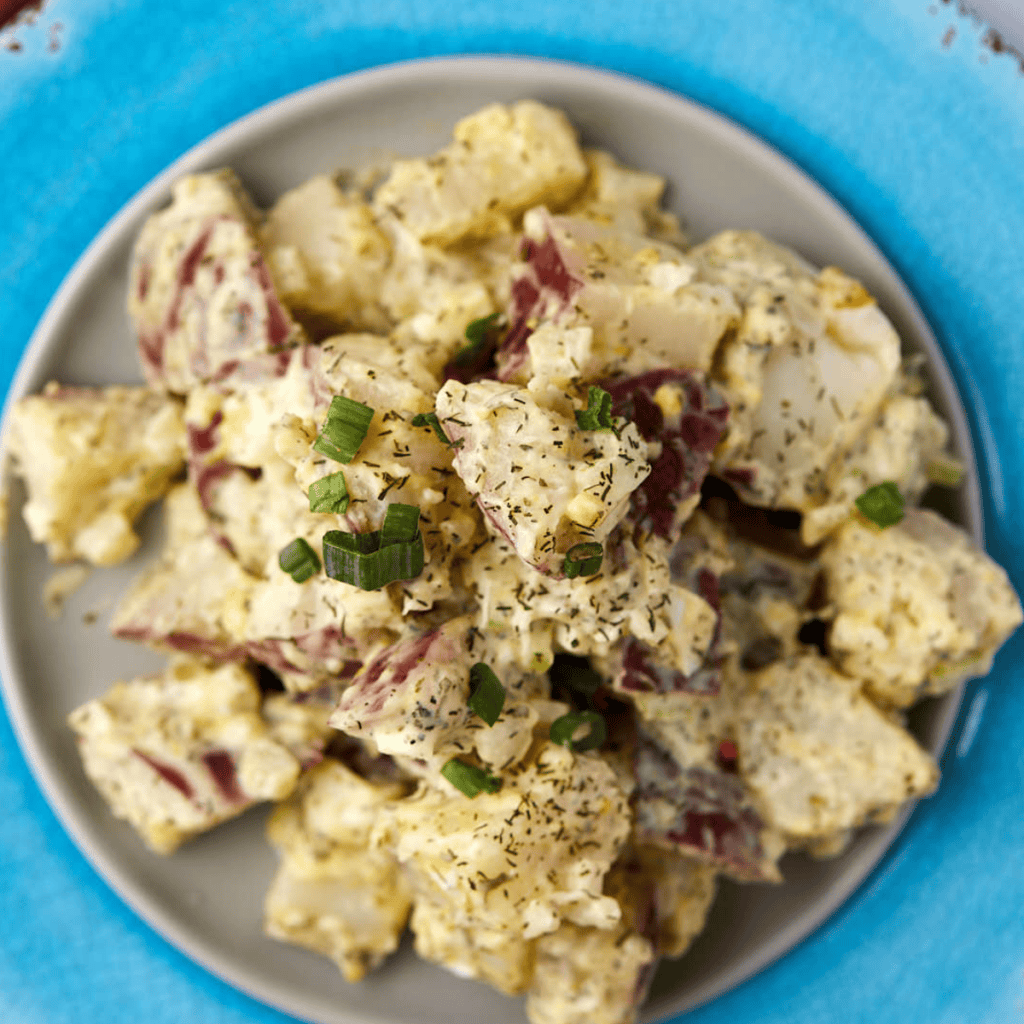
A Maryland-style crab cake is defined by what it leaves out. There is no heavy filler, no peppers, no thick sauce mixed in, and nothing that hides the crab. The flavor base is simple: sweet lump crab, mayonnaise and egg to bind, a little breadcrumb, Old Bay, and a touch of fresh herb. Authentic Maryland crab cakes let the crab be the whole point, which is also why the quality of the crab matters so much. That restraint is the difference between a Maryland crab cake and a generic one. A proper Chesapeake spread rounds it out with something cool and creamy on the side, like my red skin potato salad.
How to make Maryland crab cakes
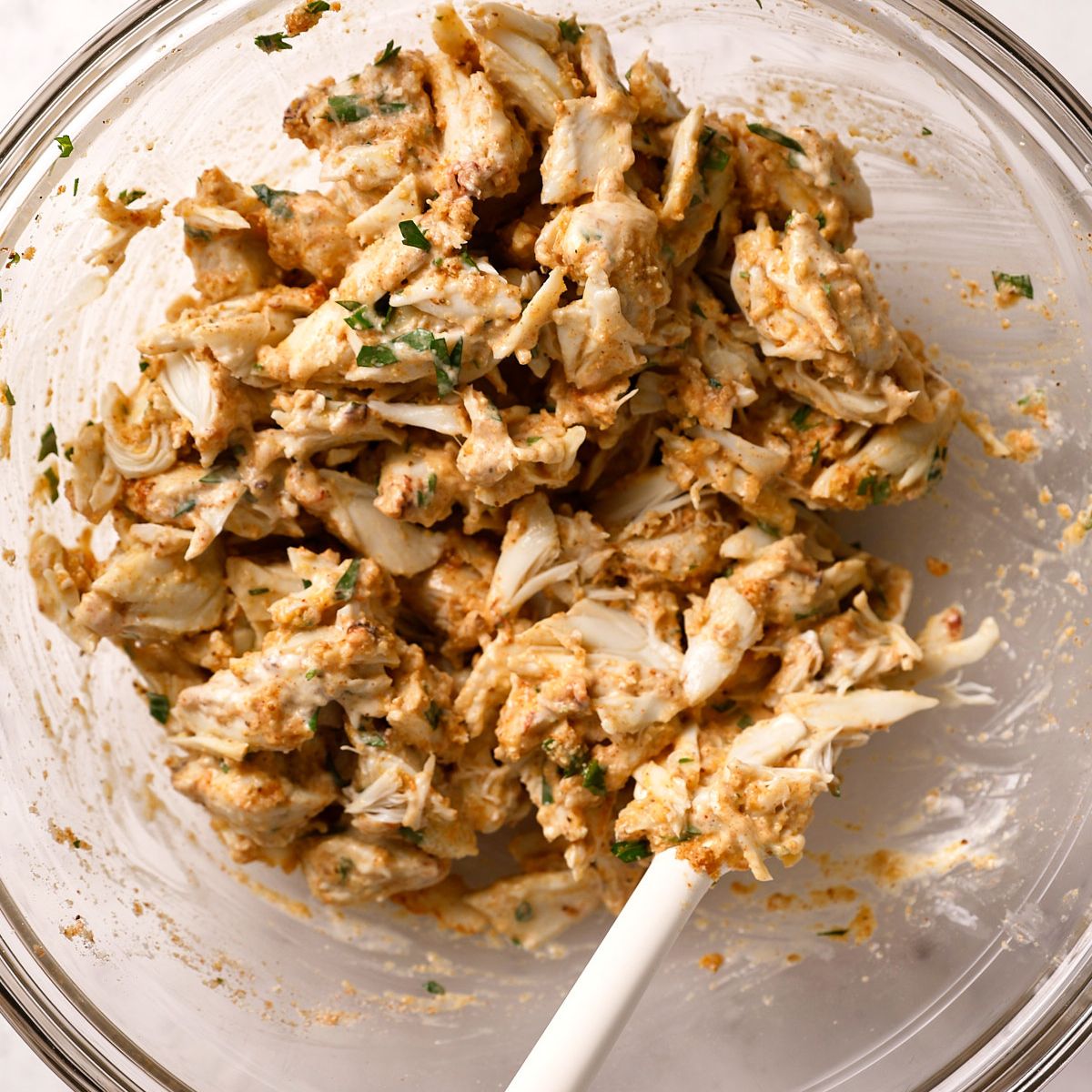
In a medium bowl, combine the crab, parsley, Old Bay, breadcrumbs, and mayonnaise. Fold with a rubber spatula, turning the mixture over rather than stirring, so the lumps stay whole. Add the beaten egg and fold just until the mixture clings together, stopping the moment it holds so you do not break the crab.
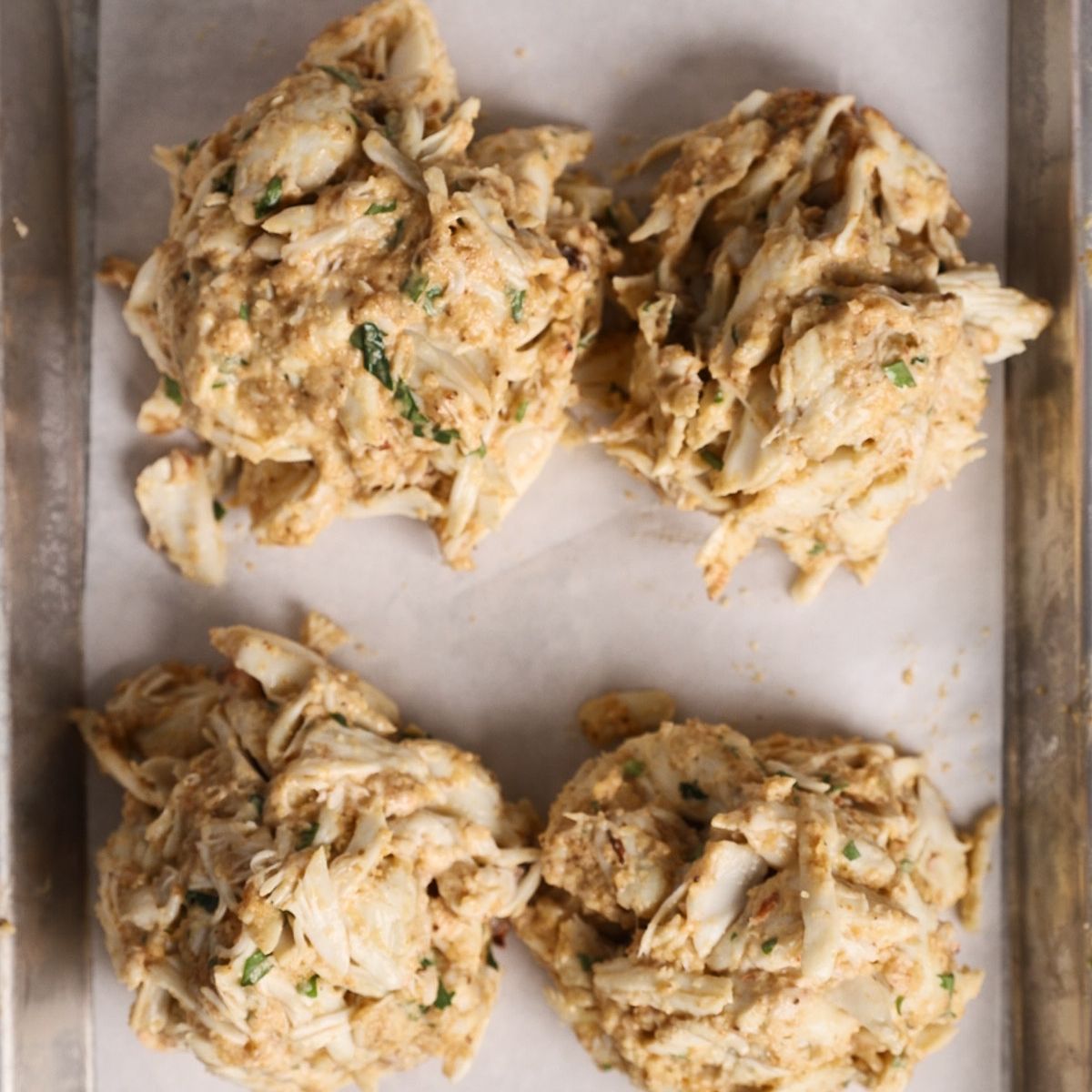
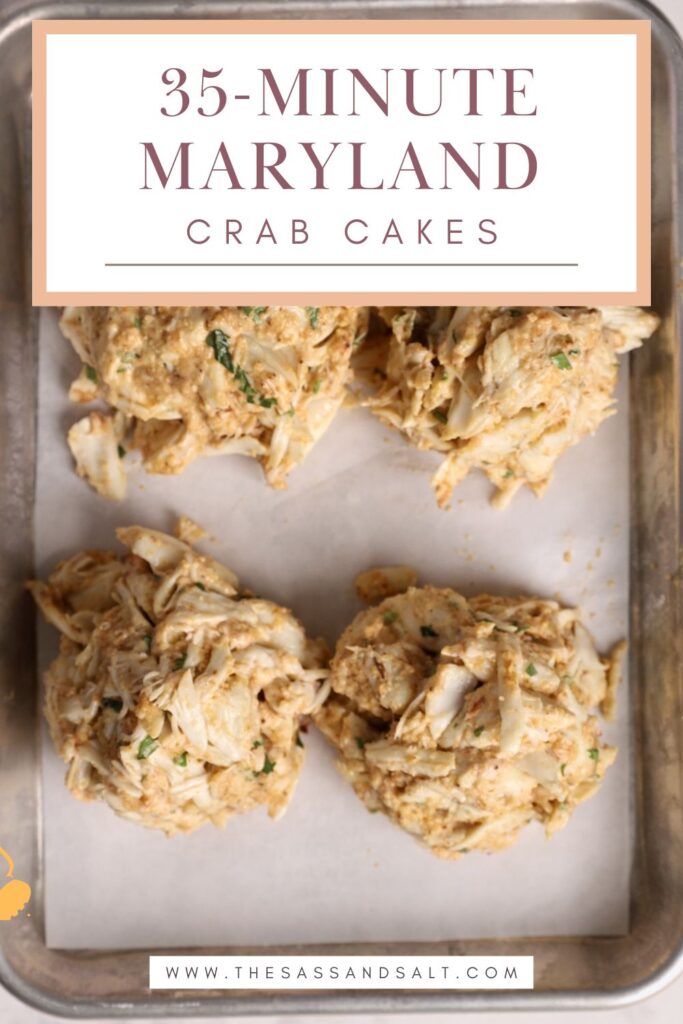
Divide into 4 cakes, about 3 inches across and 1 1/2 inches tall. Set them on a lined plate or sheet, cover, and chill at least 30 minutes (up to 24 hours).
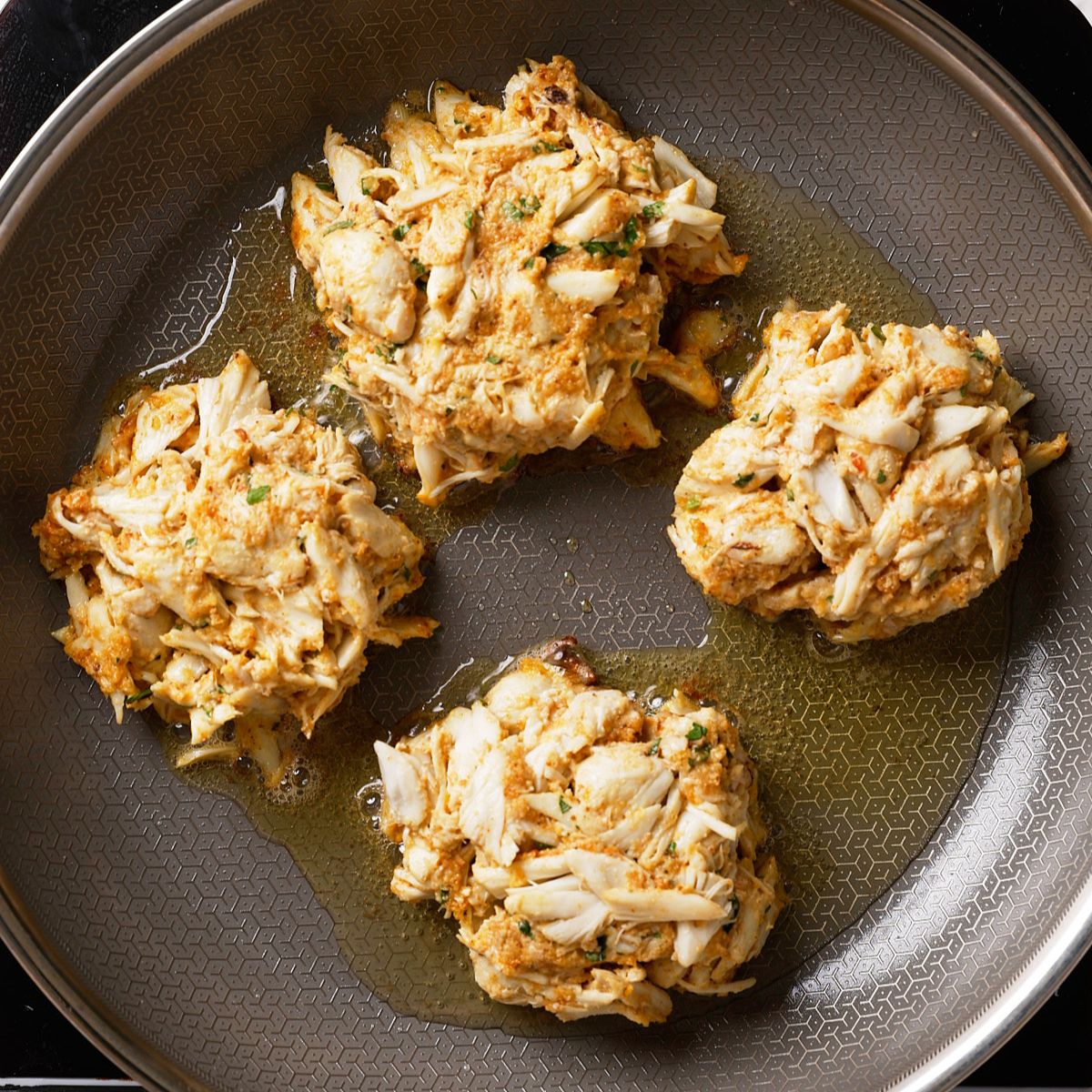
Heat the oil in a nonstick skillet over medium-high heat until it shimmers. Lay the chilled cakes in gently and do not move them. Let the first side fry undisturbed for 4 to 5 minutes, until the edges look set and the bottom is deep golden.
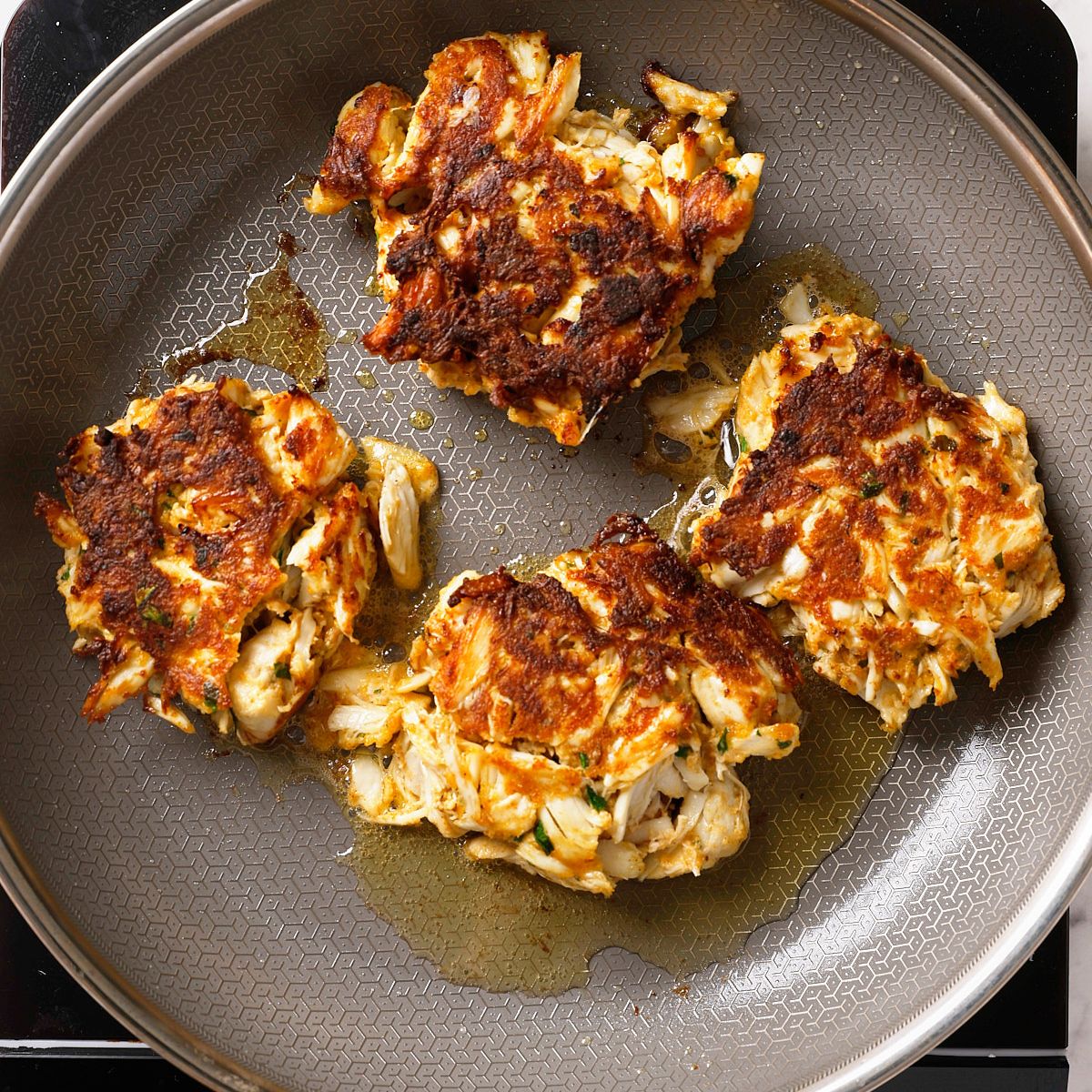
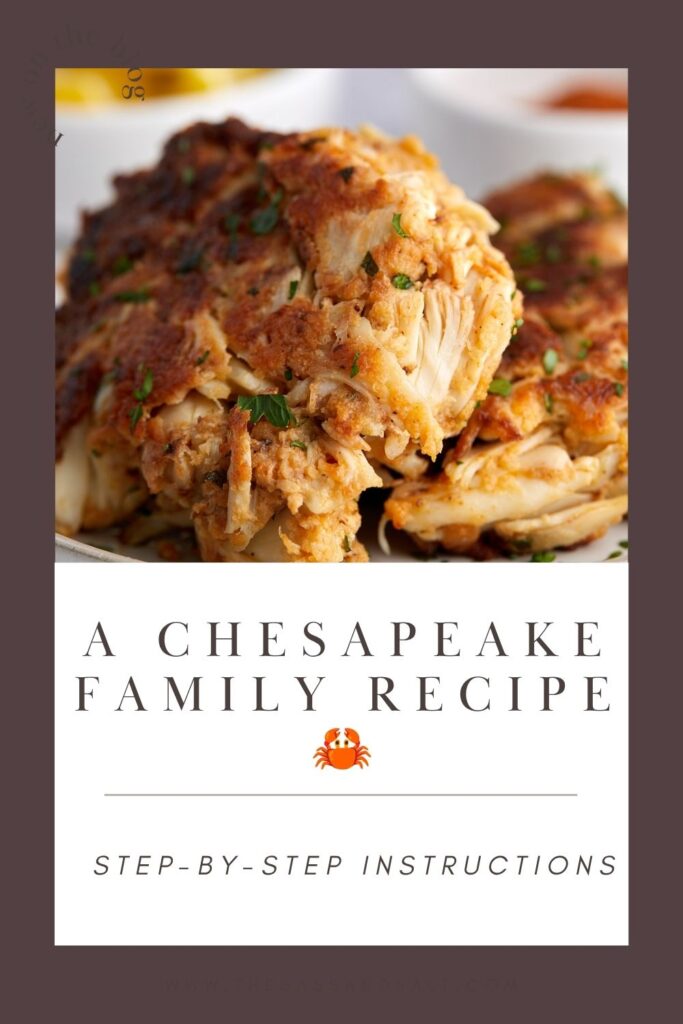
Flip each cake once, and do it gently: slide a thin, wide spatula all the way under and support it as you turn. Fry 4 to 5 minutes on the second side, until deep golden and firm.
Sarah’s Tips
- Do not skip the chill. Thirty minutes is the minimum, and it is the single biggest reason crab cakes fall apart. It firms a loose mixture into cakes that flip cleanly and hold their shape. Set a timer and walk away.
- Fold, do not stir. The whole point of jumbo lump is those big, sweet pieces. Turn the mixture over gently with a rubber spatula, almost like folding egg whites, so you keep the lumps whole.
- Use the full 1/4 cup of breadcrumbs, even though it feels loose. If it genuinely will not hold after chilling, a little more is fine, but it costs you some crab flavor.
- Use a thin, wide spatula. These cakes are delicate. A thin fish spatula slides all the way under so you can flip in one gentle, confident motion. A thick spatula pushes into them, breaking them.
- Resist the urge to flip early. A crab cake needs that full 4 to 5 minutes to build a crust strong enough to turn in one piece. If it feels like it might stick, give it another 30 seconds; a finished crust releases on its own.
FAQs
Storage
Refrigerator: Store cooked crab cakes in an airtight container for up to 2 days. I microwave these all the time and they do not need to be crispy to be good. If you do want the crust crisp again, warm them in a 350°F oven or a dry nonstick skillet for a few minutes instead.
Make-ahead: This is the strong play. Shape the cakes, cover, and refrigerate up to 24 hours, then fry just before serving so the crust is fresh.
Freezing: Freeze them before cooking. Shape the cakes, freeze on a tray until solid, then bag them for up to 2 months. Thaw overnight in the fridge and pan-fry as usual. This is a great make-ahead for a crowd.

Recipe
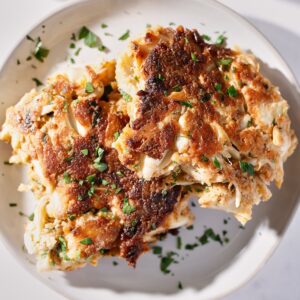
Maryland Crab Cakes
Equipment
Ingredients
- 1 lb (450 g) refrigerated jumbo lump crabmeat (I use Chicken of the Sea Wild Caught Premium Jumbo Lump), drained
- 1/4 cup (55 g) mayonnaise
- 1/4 cup (30 g) fine dry plain breadcrumbs
- 1 1/2 tsp Old Bay seasoning
- 1 Tbsp fresh parsley chopped
- 1 large egg, beaten
- 2 to 3 Tbsp neutral oil for pan-frying
To serve
- Lemon wedges
- Cocktail sauce, tartar sauce or remoulade

Instructions
- Gently fold the crabmeat, mayonnaise, breadcrumbs, Old Bay, and parsley together in a medium bowl, turning the mixture over so the lumps stay whole. Add the beaten egg and fold just until the mixture clings together; do not overmix.
- Shape and chill. Divide into 4 cakes, about 3 inches across and 1 1/2 inches tall. Set on a lined sheet, cover, and chill at least 30 minutes, or up to 24 hours.
- Heat the oil in a nonstick skillet over medium-high until it shimmers. Add the chilled cakes, do not move them, and fry 4 to 5 minutes per side until both sides are deep golden brown and the cakes feel firm. Flip only once, gently, with a thin, wide spatula; the cakes are delicate. The crab is pre-cooked, so the golden crust is the cue: you are heating them through.
- Serve. Serve hot, straight from the pan, with lemon.